
Funchal, Madeira: The City Behind the Postcard
Funchal doesn’t try to impress right away. It rests by the Atlantic, with its hills doing the talking, and before long, you find yourself drawn in. Around 100,000 people call Madeira’s capital home, most living on the hillside and looking out over the harbor. It’s as if everyone decided the view was worth it. You’ll understand Funchal’s story best by exploring on foot, just as its history invites you to do.
A City Formed by Sugar, Sieges, and Sea Trade
Funchal has been Madeira’s busiest area since people first settled here in the 1420s. The city grew rich from sugar, and later, wine became its main export. This wealth built the churches, convents, and grand houses that still shape the historic center, but it also made Funchal a target. In 1566, French pirates attacked, and the raid was so serious that it finally led to real defenses being built. Forte de São Tiago, the first fort to protect Funchal, still stands at the edge of the Old Town because of that tough week in the 16th century.
The Civic Heart: Gardens, Squares, and Grand Buildings
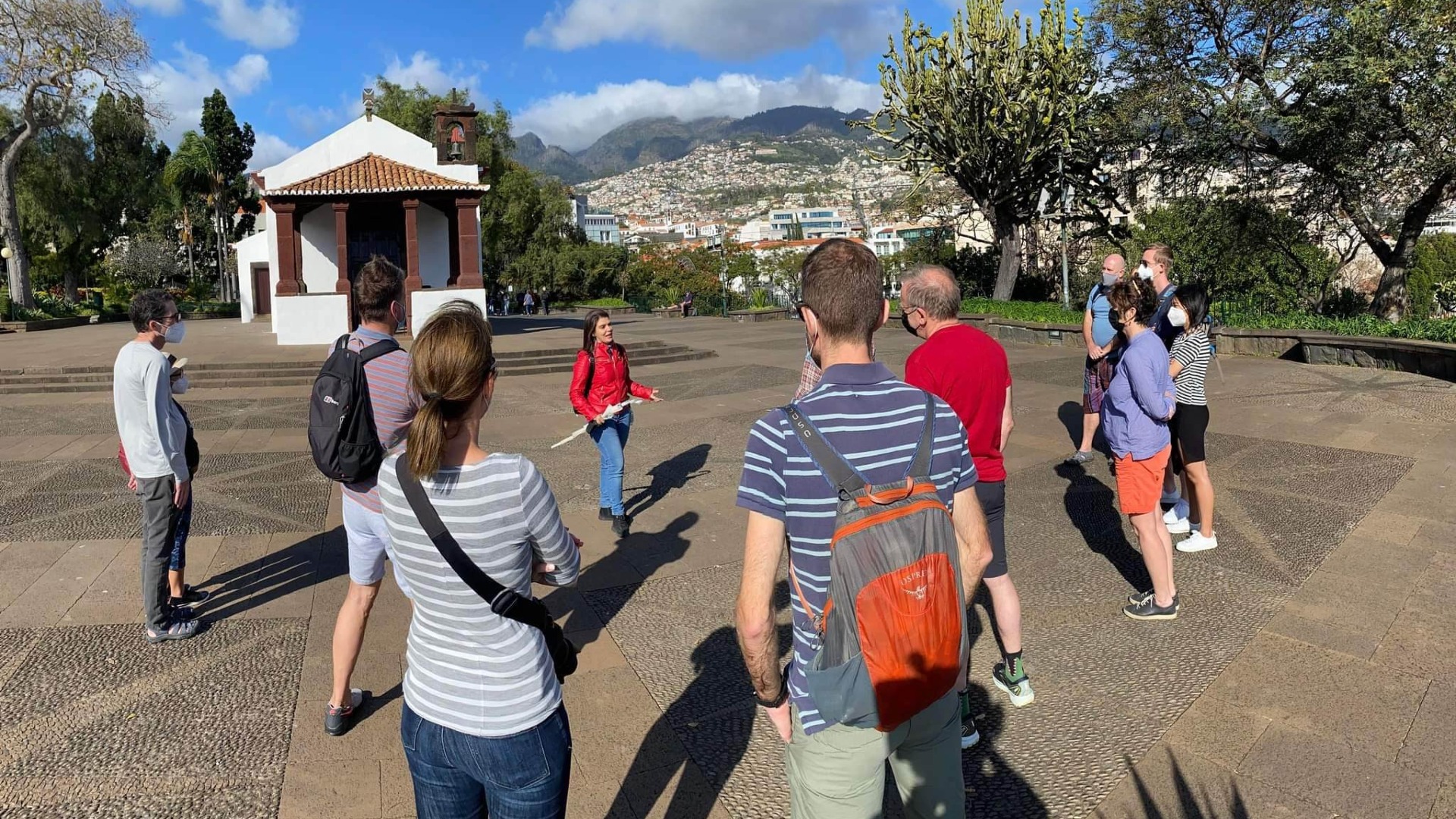
Start where the city comes together: Parque de Santa Catarina, a hillside park with views of the harbor and the small white Capela de Santa Catarina. From here, the historic center is easy to walk. You’ll see the Monumento ao Infante D. Henrique, honoring the Portuguese prince who began Madeira’s colonization, the Jardim Municipal with its shaded paths and tropical plants, and the Estátua de Zarco, which remembers João Gonçalves Zarco, the navigator who discovered Madeira in 1419.
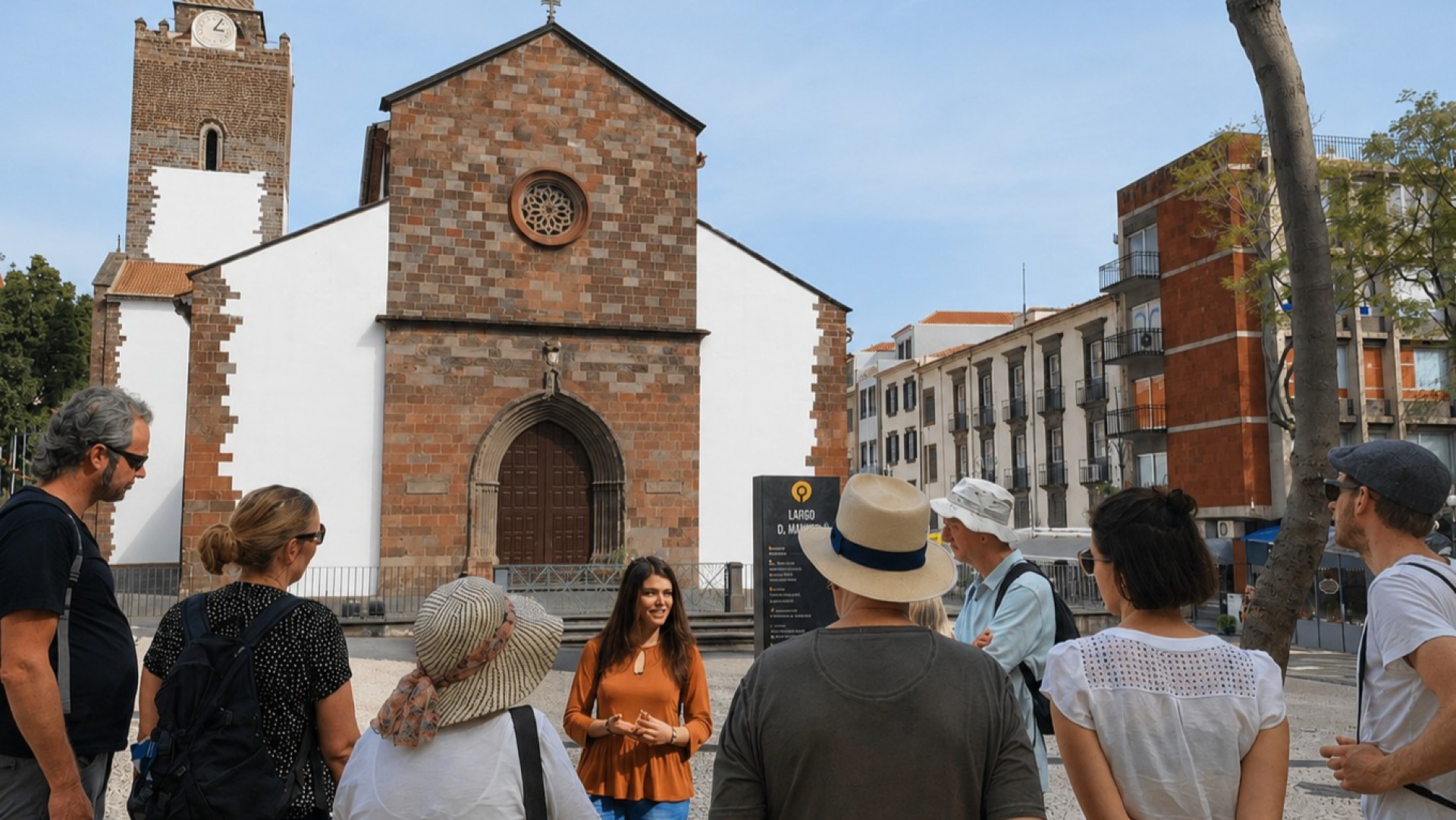
A few streets away, you’ll find Sé Catedral, Funchal’s 15th-century cathedral and one of its oldest buildings. It faces Largo do Município, the main square with black-and-white mosaics and the 18th-century town hall. Nearby, Blandy’s Wine Lodge brings you into Madeira’s wine era. This historic cellar has aged the island’s famous fortified wine, made to survive long sea journeys, for generations. Walk past Convento de Santa Clara and Quinta das Cruzes, both quiet reminders of the city’s religious orders and wealthy families, and you’ll have seen much of Funchal’s civic and commercial history in less than an hour.
Elsewhere in the center, you’ll come across Palácio de São Lourenço, a fortress turned official residence, and the modern Monumento O Abraço. This sculpture stands out when you see it. Both are close to the Assembleia Legislativa, Madeira’s regional parliament, linking the city’s colonial past to its present political life.
Zona Velha: The Old Town That Reinvented Itself
Funchal's most photographed area has a tough history. Zona Velha, the Old Town, was home to fishermen and sailors for centuries, and for much of the 20th century, it was one of the city’s poorest and most avoided neighborhoods. Its revival started with art. In 2011, a public project invited artists from Madeira and beyond to paint the old wooden doors along Rua de Santa Maria. The street quickly became one of Portugal’s most photographed places, now with over 200 painted doors, from quiet tributes to fishing families to bold cartoon fish. The square is now a hub for bars and restaurants, along with older religious landmarks like Capela do Corpo Santo and Igreja do Socorro. This is also where Funchal's drinking culture is strongest; ask around Zona Velha for poncha, Madeira's traditional spirit-and-citrus drink, and you'll find a few small bars that have kept the tradition alive for decades. The neighborhood ends at Barreirinha, a small seafront spot just five minutes from the Funchal Cable Car, where history gives way to the next reason people visit the city.
Funchal Today
What ties together sugar wealth, pirate attacks, fortress walls, painted doors, and a glass of poncha is that Funchal never tore anything down. The city kept adding new chapters beside the old ones. That’s why you can walk from a 15th-century cathedral to a modern sculpture to a 500-year-old fort, all without feeling like you’re in a museum. Funchal is a working port city that’s also beautiful, and all you need to enjoy it is a good pair of shoes and a habit of looking up now and then.
Want to Visit Funchal Like a Local?
You could explore Funchal with a guidebook, checking off the main sights, but there’s a better way to experience the city. It’s full of hidden corners, real stories, and tips you only get from someone who lives here. Why not walk the streets with a local who can show you their favorite coffee spot, point out a secret viewpoint, or share their favorite painted door?
That’s where Tripvalory.com comes in. Our handpiThat’s where Tripvalory.com comes in. Our handpicked tours are led by passionate locals who love sharing the Funchal they know, including the traditions, flavors, shortcuts, and stories you wouldn’t find on your own. Whether you’re interested in food, history, art, or want to wander the streets, Tripvalory has a tour for you. Visit Tripvalory.com and see Funchal through the eyes of someone who calls it home. Your adventure (and maybe your next favorite poncha bar) is waiting.