
Carmona, A Hilltop Town With 5,000 Years of History
Carmona sits on a ridge above the Andalusian plain, just a short trip from Seville. With almost five thousand years of history, it is one of the oldest towns in Europe. As you walk its streets, you'll notice the marks left by Carthaginians, Romans, Moors, and Castilian kings. Because Carmona is small, it's perfect for a free walking tour. In about two hours, a local guide will show you the main squares, gates, and churches, helping you get to know the town quickly. After the tour, you can spend more time at the places that interest you most. This guide introduces Carmona's history, main sights, food, practical tips, and how the free tour works.
Where is Carmona?
Carmona is about thirty kilometers from Seville and sits on the highest point of the Los Alcores escarpment, roughly 250 meters above sea level. Its location made it easy to defend, and the fertile land attracted early settlers. Locals call it the Lucero de Europa, or the "Morning Star of Europe." After the Castilian conquest in 1247, the town's motto compared Carmona to the morning star. Here's a brief look at Carmona's history.
- Carthaginians and Romans: Carmona began as a Turdetan settlement before becoming an important Carthaginian colony. You can still see parts of its ancient walls at the Puerta de Sevilla. Rome took control in 206 BC, and as "Carmo," the city became a key center in Baetica. It minted its own coins and was located at a crossroads on the Via Augusta. Julius Caesar even mentioned its strong walls in his account of the civil war.
- Muslim rule. In the 11th century, Carmona became the capital of one of the Taifa kingdoms.
- Castilian conquest. Ferdinand III reconquered the town in 1247, repopulated it, and gave it its own code of laws.
- Peter the Cruel. The citadel, now in ruins, served as Peter the Cruel's main fortress from 1350 to 1369. He turned the old Muslim fortress into the royal residence known today as the Alcázar del Rey Don Pedro.
What to see in Carmona?
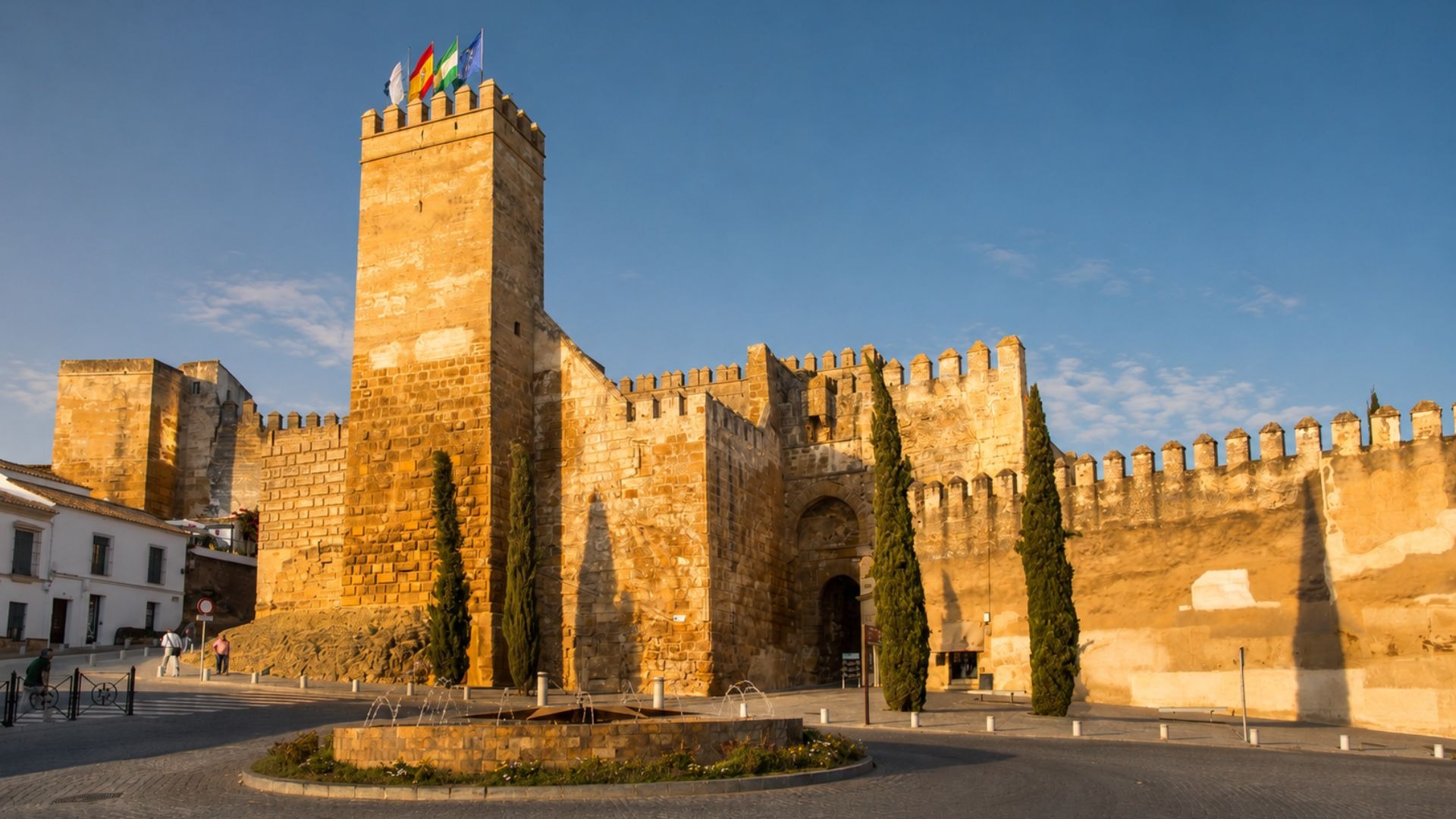
Puerta de Sevilla. This is usually the first landmark you'll see. It started as a Carthaginian structure, with later additions by the Romans, Moors, and Christians. The Alcázar de la Puerta de Sevilla includes the Torre del Homenaje and the Torre del Oro, as well as a double entrance with two arches of different sizes.
The old streets and Plaza de San Fernando. The street layout from the Carthaginian era is still visible, especially the Cardo Maximus, which ran from the Seville Gate to the Córdoba Gate. The main square stands on the old Roman forum, which was once the city's center for commerce, politics, and daily life. Walking from gate to gate follows the city's original route.
Churches and convents. The Gothic Church of Santa María was built between 1424 and 1518. The Church of San Pedro, started in 1466, features the Churrigueresque style. Its tower is a smaller version of Seville's Giralda, so locals call it the "Giraldilla." The Monastery of Santa Clara and the Convent of Las Descalzas are also located in the old town.
Puerta de Córdoba. This gate on the road to Córdoba is partly Roman. It offers a good view over the plain.
Alcázar del Rey Don Pedro. The ruins of this fortress now house a Parador hotel, and the terrace offers wide views over the vega, the fertile plain below. The Roman Necropolis and Amphitheater lie on the eastern side of town, just outside the historic center. Built in the 1st century, the amphitheater once hosted wild-animal shows. The necropolis has many tombs from the same era, including the large Tomb of Sirvilia. Discovered in 1881 and opened to visitors in 1885, it is known as Spain's first archaeological site open to the public. Guides say there are more than 900 tombs. Plan to spend an hour or two here, and check the official Conjunto Arqueológico de Carmona website for opening times and ticket details before you go.
What to eat in Carmona?
Carmona's food reflects its long history. One local treat is the English cake (torta inglesa), made by the Poor Clare nuns. Another traditional dish is alboronía, a local stew. Guides often suggest following the tapas route, marked with blue-and-white signs. The area is also known for its olives, olive oil, and grapes.
Want to see Carmona on a free walking tour?
If you only have half a day, a free tour is the easiest way to see Carmona. The tour is pay-what-you-wish, lasts up to two hours, and covers nine stops so that you can see the main sights quickly. It starts at Plaza de San Fernando. Here's what you'll visit on the tour:
- Plaza de San Fernando
- Carmona City Council
- Church of Santa María
- Monastery of Santa Clara
- Convent of Las Descalzas
- Plaza de Abastos, the market in a former convent
- Puerta de Córdoba
- Alcázar del Rey Don Pedro
- Alcázar de la Puerta de Sevilla
Why a free walking tour suits Carmona?
- You set the price. At the end, you tip the guide based on what you feel the tour was worth, so you only pay for the value you received.
- Booking is risk-free. You can book or cancel at no cost. A guide makes the history much easier to understand, and places like the Roman Forum, Carthaginian walls, and the royal fortress are more interesting when someone explains them.
- After two hours, you'll know your way around and can go back to the places you liked best, making the rest of your visit easier and more enjoyable.
- Groups are small, so you'll have the chance to ask questions and learn more from the guide.
Is the free tour in Carmona really free? Booking and cancellation are free, and you don't pay anything in advance. You tip your guide at the end.
How long is the free walking tour in Carmona? Up to two hours, with nine stops, starting at Plaza de San Fernando.
The best way to enjoy the town's rich history and lively streets is to book a free walking tour. Visit Tripvalory to reserve your spot. You'll discover Carmona's secrets, meet passionate local guides, and see the highlights in just two hours. This is the best way to connect with the city. Make your trip memorable and book the free walking tour of Carmona on Tripvalory today.