
Why Does Taipei Feel Like Someone Left Multiple Cities Stacked on Top of Each Other?
When you leave Taipei Main Station, the city’s layout quickly stops making sense. Walk north, and you’ll find old temples, noodle shops that have been around for generations, and market vendors selling dumplings in the same spot for decades. Go south, and you’ll see glass skyscrapers, luxury stores, and coffee shops where a latte costs more than breakfast in the old part of town. Head west, and you’ll find neighborhoods with 50-year-old buildings that already look ancient. Go east, and you’ll see new developments that weren’t there five years ago. Taipei packs old and new side by side.
All of this happens in one city, and you can get between these places in just a few minutes by subway. That’s why the contrasts feel so close together.
This isn’t chaos. It’s how Taipei works. Different empires and rulers shaped the city, but Taipei kept building instead of replacing. Japanese colonial buildings sit beside Qing dynasty temples and modern glass skyscrapers, all close together. That balance is normal here.
The old, winding streets aren’t part of a preservation project. They’re simply the earliest parts of the city that people kept using instead of tearing down.
If you walk three blocks along the same street in the old district, you’ll pass through two centuries of history without even realizing it.
What Makes Taipei Different From Every Other City You'll Visit in Taiwan
Most cities choose a direction and commit to it. Shanghai committed to becoming ultra-modern and demolished much of what came before. Tokyo rebuilt after World War II and chose to make everything efficient and new. Bangkok developed into something chaotic and layered in its own way. Taipei did something different: it kept everything.
Taipei didn’t pick just one direction. It kept everything. The city keeps running, adds new things, and lets the old and new exist together.
That creates a city where you can have a profound spiritual experience in a temple built in the 1700s and then walk three blocks and buy designer sneakers in a store that opened last month. Where construction projects happen next to buildings that haven't changed since the 1950s. Where history and the present tense share the same block without any awkwardness.
For most tourists, that can be confusing. For residents, it is normal. That gap between confusion and normal is Taipei in one sentence.
How Taipei Actually Became Taipei
Taipei wasn't always a city. Before the 1800s, it was just a swampy settlement that few people wanted. Then the Dutch arrived, followed by the Qing dynasty, and later the Japanese after 1895. Each group built things, left its mark, and eventually moved on. They built railways, administrative buildings, temples, and bridges that still matter. They built them to last because they thought they were there forever. Then World War II happened, and after that, they weren't.
After WWII, when the mainlanders (the Nationalist Chinese government) took over, they had a choice: demolish everything colonial and start fresh, or keep using what was already there. They chose to keep using it. Not out of respect for colonial history, but because demolition is expensive and disruptive.
So Taipei kept adding on instead of replacing things. The Japanese reused buildings, old neighborhoods stayed active, and new buildings went up right next to the old ones. Even the subway was built through ancient areas without tearing them down.
The result is a city where 150 years of architecture and politics are still visible as you walk. Taipei kept it all in place.
The Landmarks That Explain Taipei
You can’t really get Taipei from a guidebook. You have to walk the city yourself. Here’s what you’ll actually see when you do:
This park exists because Taiwan made a choice many countries avoid: acknowledging something bad happened, building a memorial, and teaching people about it.
On February 28, 1947, an incident involving colonial-era regulations sparked violence that killed thousands. This wasn't a distant historical event that happened to other people. It happened in this city, to the people living there. The government
response shaped Taiwan's entire political future.
Many countries might try to forget something like this and move on. Taiwan chose to build a park instead, and that choice gives the site its meaning.
The park has lovely water features, monuments, and open spaces. But its real beauty isn’t in the landscaping. It lies in the city’s choice to remember hard things and make space for them.
When you walk through Peace Park, you’re walking through Taiwan’s political conscience. The monuments have names, dates, and stories about what happened and why it matters. A guide can explain what you’re seeing. Without that, it’s just a nice park. With it, you learn something important about how Taiwan sees itself.
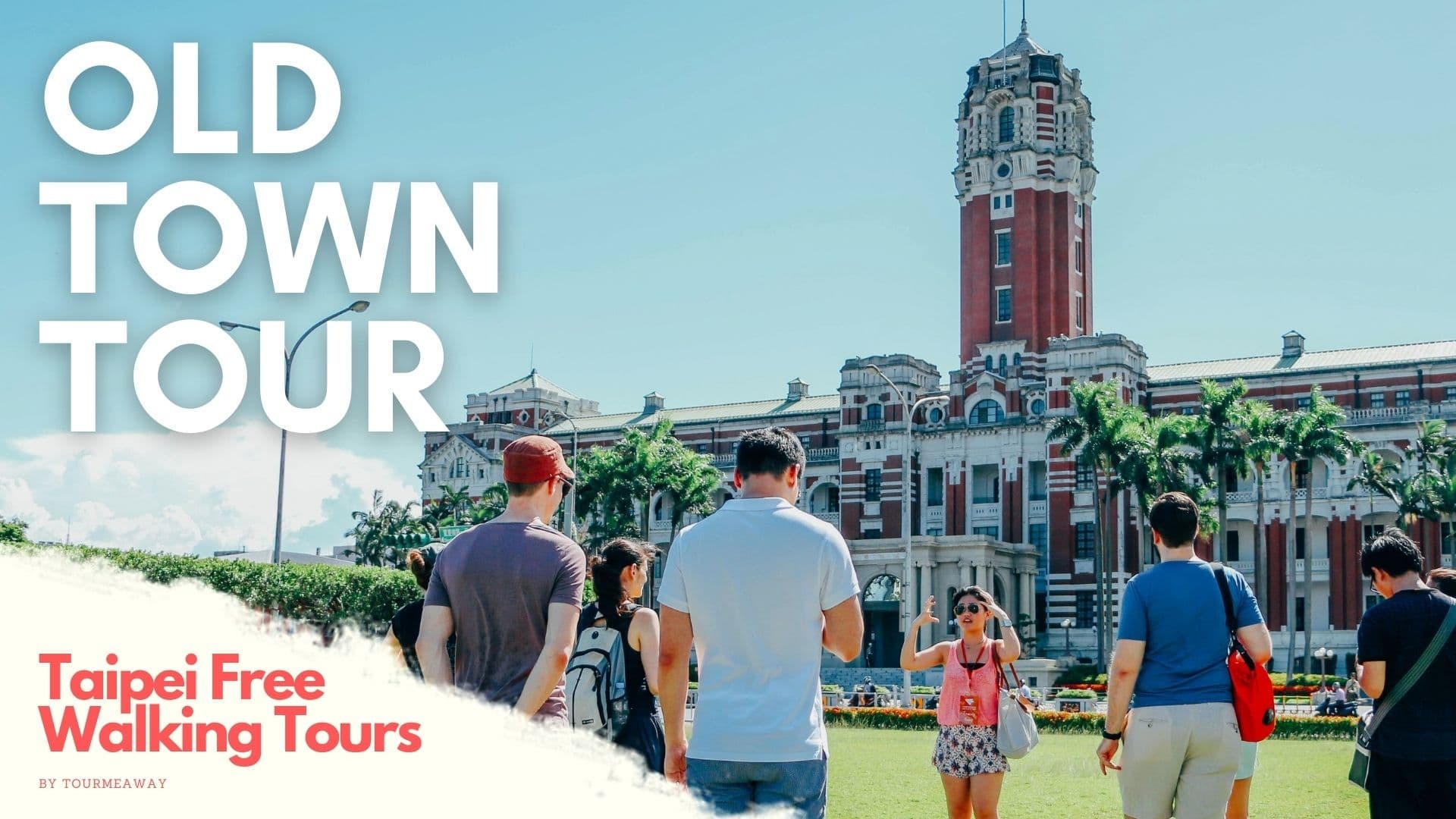
The Presidential Office Building:
A Government Building That Stayed Visible
This Japanese colonial building from 191 is Taiwan’s most important government building, and it sits out in the open. No walls or heavy security surround it. It’s right in the middle of a plaza where anyone can walk by. That openness makes the building part of the city, not apart from it.
The architecture is Japanese colonial, which means someone cared about proportions, design, and how the building would look for the next hundred years. The blue roof tiles, the stonework, and how it sits in relation to the plaza are all intentional, designed to project authority and stability.
The building survived World War II bombings that destroyed much of the city around it. It survived Japanese rule, mainland Chinese administration, and several government changes. It was never hidden away. It stayed in use and stayed visible.
You can’t go inside without an official appointment, but the outside and the plaza already tell the story. Taiwan chose not to hide power behind walls, but to keep it visible and open. It’s one way to understand Taiwan’s government.
Chengzhong Market: The Authentic City Center, Still Acting Like It
This covered market isn’t a tourist spot. It’s where generations of Taipei residents buy breakfast, fish, vegetables, and everything else. The market is busy and lively, with vendors focused on their regular customers, prices only in Chinese, and little concern for whether tourists understand what’s going on. That everyday focus is exactly what keeps it central.
That’s the point. This market has been the city center for 150+ years. It still is. The fact that it functions much the way it did fifty years ago, with no accommodation for tourism, tells you something important: Taipei values preserving how it works over polishing it for visitors.
The dumpling shops are there because people need breakfast. Fish vendors are there because people need fish. Soy milk stands are there because that’s part of life in Taiwan. None of this is designed for tourists—it’s for Taipei residents, but you’re welcome to join in. Breakfast here is NT$50-150, and you're eating the same thing Taipei residents eat. Actual breakfast.
Taipei Zhongshan Hall: Colonialism That Accidentally Made Beautiful Things
Built in 1936 during the Japanese occupation, Zhongshan Hall is what happens when architects and builders care about their work. The proportions are intentional. The stonework is detailed. The overall sense is that someone wanted this building to look good for longer than it would physically last.
It survived the same wars and occupations as everything else in the neighborhood. It stayed beautiful through it all. That matters, because many colonial buildings around the world are either torn down or kept only as reminders of the past. This one is still here because it’s a good building; it still hosts cultural events, and the city still uses it.
When you see this building, you realize that colonialism isn’t right or justified, but when colonizers built things well, those buildings can last and become part of the culture that follows. Taipei made this building part of daily life, not just a monument to the past.
That’s a more complicated historical reality than "we hate colonialism, so we demolished all the colonial buildings," and Taipei chose the complicated version.
Ximending: The City's Young, Loud, Commercial Heart
Ximending is what old Taipei looked like before it became Old Taipei, a wealthy residential neighborhood where merchants and wealthy families lived. Then the economy shifted, the city expanded, and Ximending became what it is now: organized chaos, neon signs, packed streets, hundreds of shops crammed into a few blocks, street food vendors, and bubble tea stands competing directly with others on the same block.
It's the city's commercial theater. It's where young Taipei people spend money. It's where you see what Taipei residents wear, what they buy, and what they care about. It's loud, chaotic, and exactly what modern Taipei commerce looks like.
What’s interesting is that Ximending became this way naturally, not because someone planned a commercial district. It grew this way because of how cities change on their own, not because of city planners. You can understand contemporary Taipei better than you would from any marketing material. This is what people actually do. This is where people actually go. This is what the city values.
The Red House: Preservation That Trusts Community Instead of Money
Built as a marketplace in 1908 during Japanese colonialism, the Red House sat neglected for decades. It could have become luxury condos. It could have been demolished for something newer. Instead, it got preserved and repurposed as creative space for LGBTQ artists and the wider artistic community.
The red brick is original, and the renovations are modern but still respect the building’s history. Inside, you’ll find galleries, artist studios, performance spaces, and community events. The building stayed active instead of turning into a museum or luxury property.
This shows what Taipei values. The city chose to keep an old building and let artists use it, instead of turning it into a profit-making venture. That’s not the usual choice. Most cities would demolish or commercialize it. Taipei wanted to see what would happen if artists took over the space.
The Red House became culturally significant. Not because of money. Because of trust.
Taiwan's Modern History Compressed Into One City
Taipei is where Taiwan's actual complicated history happened. The temple district represents pre-modern Taiwan. The Japanese colonial buildings represent the occupation period. The Presidential Office represents the transition to independence. The modern architecture represents Taiwan's economic growth. The Red House represents Taiwan's cultural evolution.
When you walk through the old district, you’re moving through strata of history that were never torn down. Each layer is still there, still working, and still part of daily life.
Most cities erase their past to make way for the future. Taipei didn’t do that. The city chose to keep what works, add what’s needed, and let both old and new exist together. That is understanding Taiwan.
The Actual Taipei Tourist Experience
Taipei is impressive. Taipei 101 is a tall building meant to impress, and it does. You look at it, think, "wow, that’s a building," and then move on.
Old Taipei is interesting, not because it impresses, but because it confuses and contradicts itself. It makes you think about history, culture, and what cities choose to keep. You’ll still be thinking about it days later.
Most tourists look for things that impress them. Taipei offers things that are interesting instead. Those aren’t the same.
Tourists who spend their whole visit in Taipei's modern shopping districts have a fine time. They're seeing an impressive modern Asian city. They're missing the actual city, especially the part that explains why Taiwan became Taiwan.
That part of the city is old, layered, chaotic, beautiful, and doesn’t care if tourists find it convenient.
What Taipei Tells You About How to Be a City
You can demolish and rebuild. Shanghai did that. You can be carefully planned and efficient. Tokyo did that. You can embrace controlled chaos. Bangkok did that.
Or you can do what Taipei did: keep what works, add new things carefully, avoid erasing the past, and trust that complexity is better than simplicity. In Taipei, history and the present exist together, and there’s no reason to apologize for either.
It’s the messiest choice, but it’s what makes it a city where you can see 150 years of history just by walking around. Here, history is still useful, not just something to remember. The past isn’t gone—it’s still part of daily life.
When to Actually Visit Taipei
Spring (March to May) and autumn (September to November) are the best times to walk around old neighborhoods for hours without getting too hot. The weather is mild, humidity is lower, and the sun isn’t as harsh.
Summer is hot and humid in a way that makes walking feel like an endurance test. Winter is fine but cold.
The old district stays the same all year and is always busy. The only thing that changes is whether you mind sweating while you learn about history.
What Taipei Wants You to Know About Itself
Taipei isn’t trying to be like Bangkok, Shanghai, or Tokyo. It’s just trying to be itself. It kept its history and built its future. It didn’t pick one or the other—it kept both.
That’s not how most cities work, but it’s how Taipei does things.
The Questions Taipei Visitors Actually Ask:
- Is Taipei actually safe? Extraordinarily safe. Crime against tourists is so rare it barely registers. The streets are walkable at any hour. The city has decided that safety is valuable and invested in it.
- Can you really understand Taipei in just a few days? No, not at all. A few days only give you the basics. Walking with locals helps you see how everything connects. It’s not fluency—it’s just enough to get by.
- Do you need a guide to explore the city? Technically, no. But in practice, you’ll miss a lot without one. The streets are there either way, but it's easier to understand what you’re seeing with someone who knows the stories.
- What should you wear? Comfortable walking shoes are a must. Sidewalks mix modern paving with old cobblestones. Bring water and sunscreen—the sun reflecting off the concrete is stronger than you might expect.
- Dress casually. Taipei is a modern city with a relaxed attitude toward clothing. Jeans and a T-shirt are just fine.
- How does money work? Taiwan uses New Taiwan Dollars (TWD or NT$). Cash is still common for small transactions, even though Taipei is tech-forward. ATMs are literally everywhere. ATM exchange rates are better than money changers.
- What’s the best food to try? The real Taipei food is market breakfast—dumplings, noodles, soy milk, and youtiao (fried dough). Breakfast costs NT$50-150. Street food in Ximending is good but touristy. The best restaurants are off the main streets, and your guide can recommend them.
Is the history actually interesting or just old buildings?
The buildings are interesting because of their history. The history shows how Taiwan became what it is today. They go hand in hand. Without context, old buildings are just old. With context, they help you understand a country.
Ready to Actually Explore Taipei?
If you want to walk through the old district with someone who understands how all these pieces connect, book a free walking tour on Tripvalory.com. It costs nothing to reserve; you pick your time, and you tip after whatever you think the experience was worth.
You’ll spend a few hours and come away understanding Taipei better than most tourists do after a whole week.
That's genuinely worth doing.