
What makes Marrakech seem like a maze designed to lose you?
Once you leave Jemaa el-Fnaa, the city begins to surround you after just a hundred meters.
First, you notice the sounds: coppersmiths hammering, calls to prayer overlapping, and a loud argument over leather slippers. Next, the smells hit you: cedar sawdust, mint tea, tanned leather, and cumin. Soon, the streets stop making sense. What looked like straight roads from the square start to curve, alleys end at front doors, and your map app becomes useless.
Getting lost here is not a mistake; it's part of the plan. The medina was built to confuse anyone unfamiliar with it, and even after eight centuries, it still works on first-time visitors.
What is it that gives Marrakech its name as the Red City?
The name comes from the natural pink clay used centuries ago to build the city's walls and houses. This color still shapes the city's look today. But that's only part of the story. When the Almoravid dynasty made Marrakech their capital in 1070, they designed the city for defense, not for easy navigation.
Tall, uniform walls surrounded the city. Inside, a maze of winding passageways led countless alleys to private homes. This was a military strategy meant to slow down and confuse invaders who got past the walls. Today, the same design that once stopped armies now confuses tourists trying to follow their phone's signal through the medina.
What are the main landmarks to see in Marrakech?
The medina of Marrakech surprises most tourists with its contrasts. Plain, simple outer walls hide some of the most detailed and beautiful interiors. The examples below show how this hidden design shapes the city and helped make it an imperial capital.
Jemaa el-Fnaa
This square is the city's heart, and its mood changes throughout the day. In the morning near Café de France or Café Argana, you'll find a big, quiet space with vendors setting up. On clear days, you can see the Koutoubia Mosque's minaret and the snowy Atlas Mountains beyond. By night, the square turns into an open-air show, filled with food stall smoke, storytellers, snake charmers, and the steady beat of Gnawa musicians.
Koutoubia Mosque
Since the 12th century, the Koutoubia minaret has stood out on Marrakech's skyline. Once you know where it is compared to the square, it becomes a helpful landmark. Non-Muslims can't go inside, but the outside and the gardens are still worth a visit.
Bahia Palace
Built in the 19th century, this palace was meant to show off its owners' wealth and taste. It's the best example of the idea that plain exteriors can hide stunning interiors. With cedar ceilings, zellij tiles, and quiet courtyards, it shows how Marrakech's elite once lived.
Ben Youssef Madrasa
For centuries, this was one of the world's largest Islamic colleges, built for peaceful study rather than show. There's a small entrance fee (about 50 MAD) to see the central courtyard pool, which is surrounded by cedar ceilings and Arab-Andalusian zellij tiles. The carvings are so detailed that they're hard to capture in photos.
Dar Timtam
Built in 1876 for the minister of justice to Sultan Moulay Hassan I, this mansion was later updated in the Arab-Moorish style. It's smaller than the Bahia Palace, but its open patio and geometric tiles offer the same private elegance, just on a smaller scale.
The Old Slavery Market
Today, the plaza is quiet, but it was once the site of the trans-Saharan slave trade in Marrakech until the early 1900s. It's easy to walk by without knowing its history, so having someone explain it makes a big difference.
The Medina Souks
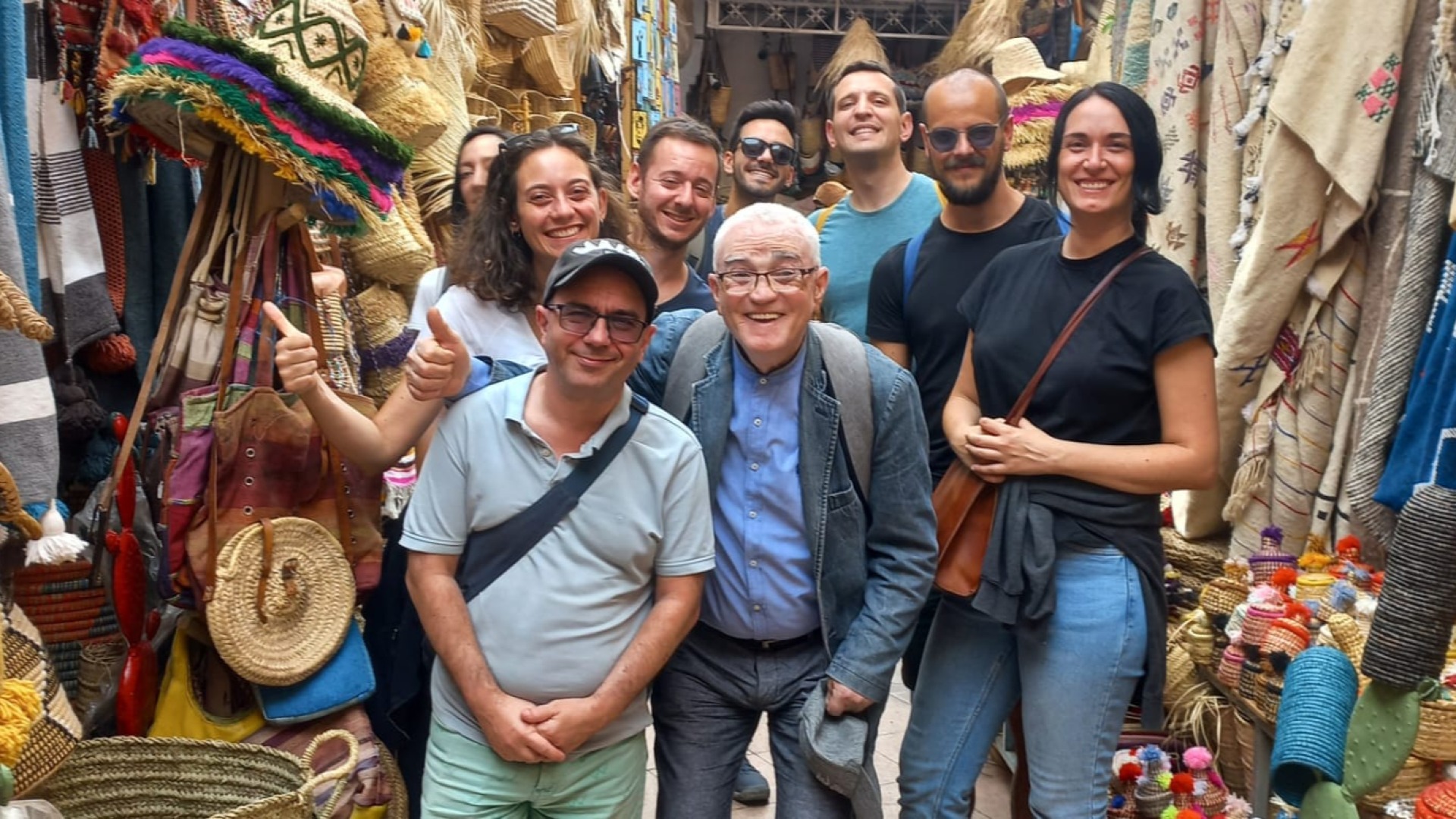
The souks branching off from Jemaa el-Fnaa are organized by trade, showing the influence of old guild traditions. Souk Semmarine is the main route into the market, with side areas like Souk Zrabi for carpets, Lbiadin for textiles, and Rahba Kedima, the spice square, which you can smell before you see it. Inside the souks, you'll also find herb pharmacies selling traditional remedies along with spices, something many visitors miss.
Is it safe to explore Marrakech without getting lost or being scammed?
Marrakech is usually safe for tourists, but even experienced travelers can get lost in the medina. Street names change, phone signals drop in the covered souks, and printed maps only aid once you're already inside.
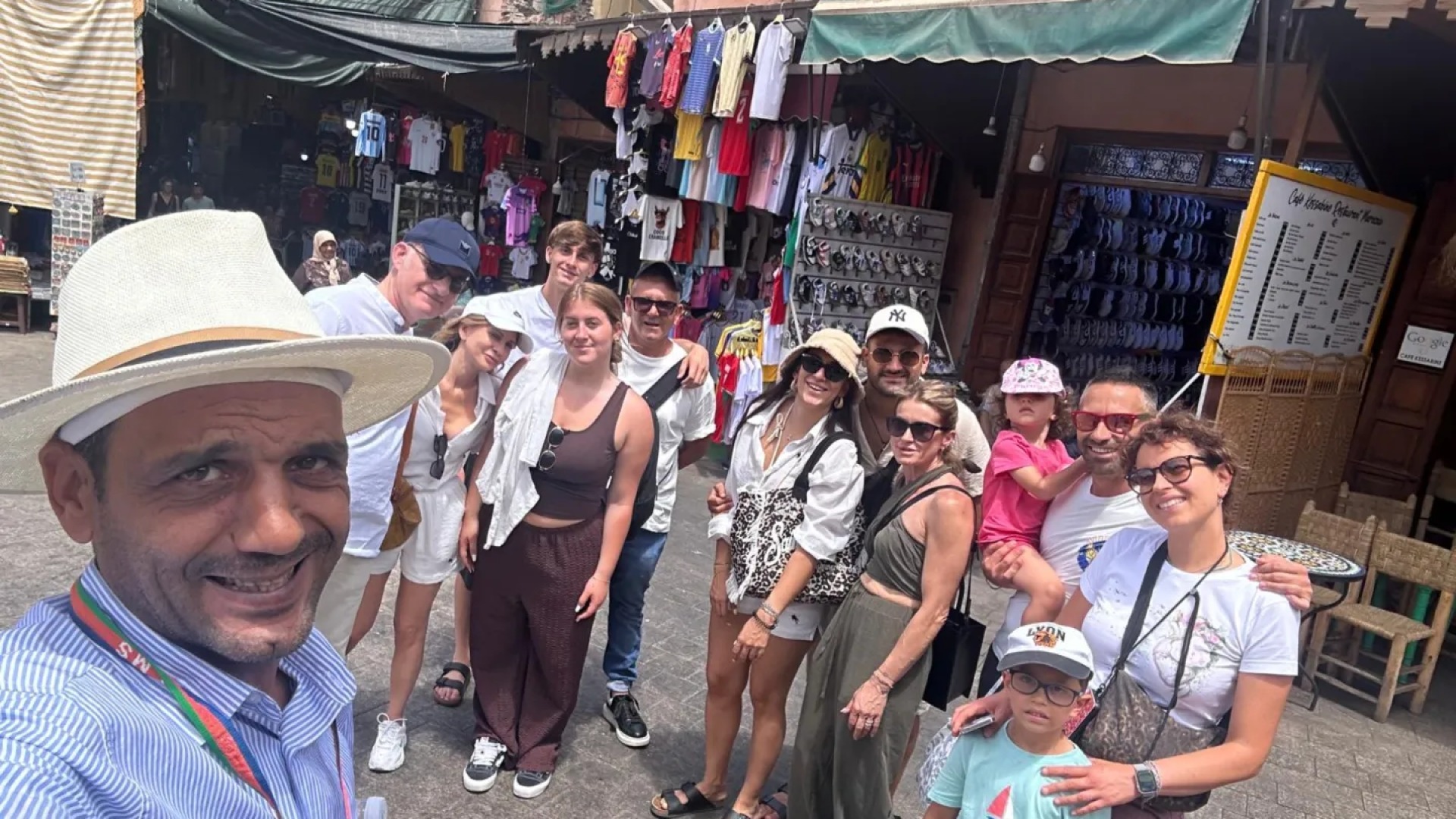
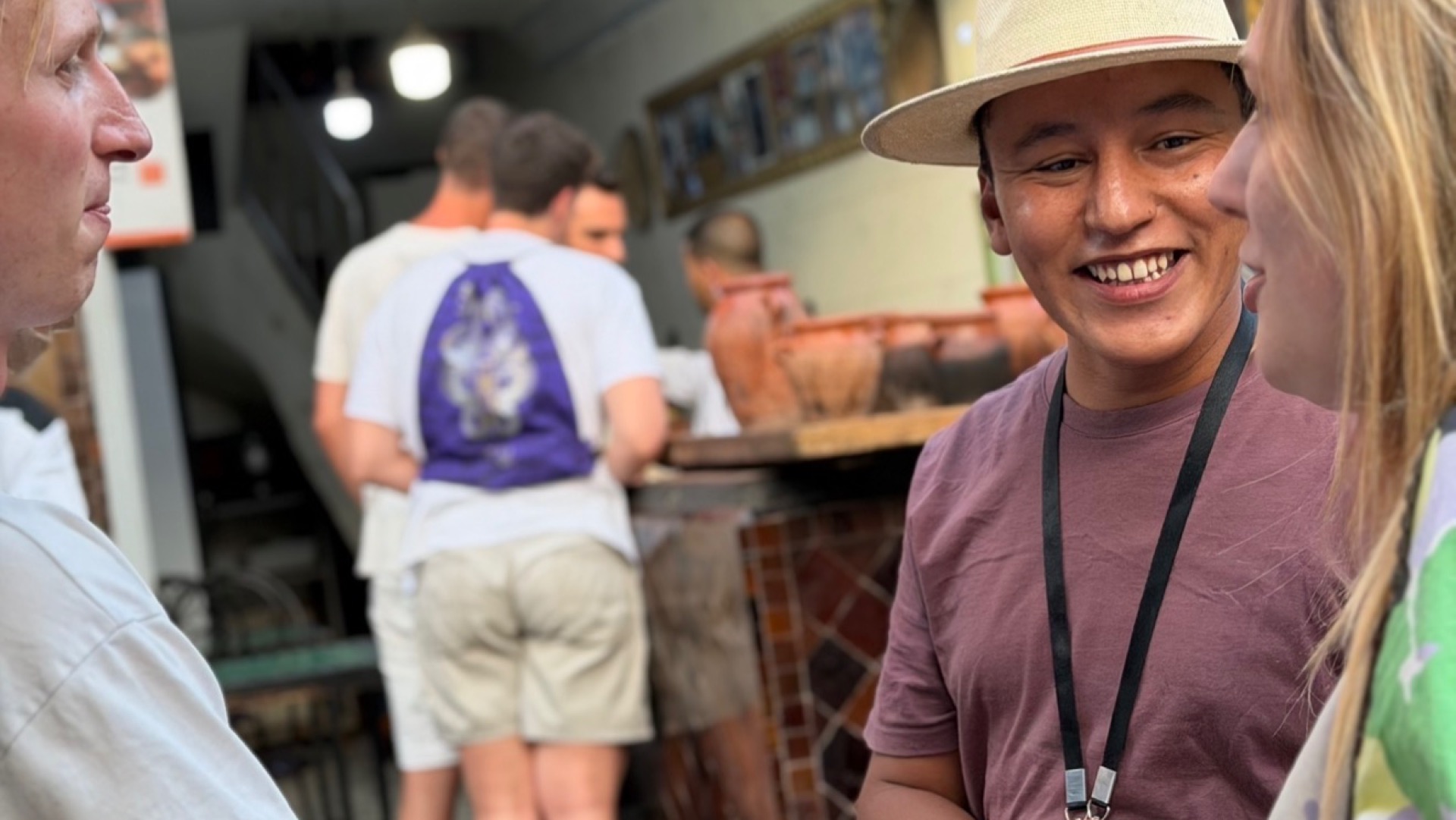
Unofficial guides often show up at confusing spots, offer help, and then take you to a shop where they get a commission. This isn't usually dangerous, but it can be annoying and take you off track. To avoid this, hire an independent local guide like Abderrahman, Pedro, or Youssef. You'll avoid staring at your GPS, won't stand out as a target, and your guide will help you understand the history between the market and the old courtyards.
What kind of clothing should you wear in Marrakech?
The streets in the Medina are uneven, and walking tours can last three to six hours, so wear comfortable shoes that you've already broken in. Bring water and sunscreen too, since the sun reflecting off the red clay walls is stronger than it looks.
Dress modestly by covering your shoulders and knees, especially when visiting madrasas or other historic religious sites. This respects regional customs and is often needed for entry.
What is the system for giving tips and using cash in Marrakech?
Be sure to have some Moroccan dirhams (MAD) for entrance fees, shopping in the souks, and tipping your guide. Paying a guide with foreign money can cause problems like long bank lines, exchange fees, and wasted time. Withdrawing MAD locally is much easier.
Tripvalory's walking tours are free to book and run on a pay-what-you-think-it-was-worth system. You don't pay upfront. At the end, just tip your guide in dirhams based on how much you enjoyed the tour.
What is the best time to visit Marrakech?
Spring and autumn are the best times to walk around the medina, as the weather is comfortable. Summer afternoons can be too hot for long walks. No matter when you visit, see the square both in the morning, when it's calm, and at night, when it comes alive.
Want to experience Marrakech like a local?
You can usually figure out most cities with a map, but not Marrakech. Its most interesting places are hidden behind plain walls and unmarked doors. You won't see what's inside until someone who knows the city shows you.
To book a free walking tour in Marrakech, visit Tripvalory.com. You can reserve your spot for free, pick your guide and language, and pay whatever you feel the tour was worth at the end.