
Why Does Marrakech Feel Like a Maze Built to Get You Lost?
Step off Jemaa el-Fnaa and the city closes in around you within a hundred meters.
The sounds hit first, hammering coppersmiths, a dozen overlapping calls to prayer, someone haggling loudly over a stack of leather slippers. Then the smells, cedar sawdust, mint tea, tanned hide, cumin. Then the layout itself stops making sense. Streets that looked straight from the square curve back on themselves, alleys dead-end at somebody's front door, and the grid you were relying on from the map app simply isn't there anymore.
That disorientation isn't a design flaw. It's the design. Marrakech's medina was built to confuse anyone who didn't already know it, and eight centuries later it still works exactly that well on a first-time visitor.
Why Is Marrakech Called the Red City?
The nickname comes from the natural pinkish clay used to build the city's ramparts and houses centuries ago, a material choice that still defines the skyline today. But the color is only half the story. When the Almoravid dynasty founded Marrakech as their imperial capital in 1070, they engineered the layout around defense, not convenience.
Towering uniform walls went up around the perimeter, and inside them, a web of winding corridors was laid out so that countless alleys dead-end at private residential doorways. That was a deliberate military tactic, meant to slow down and confuse any invading force that made it past the walls. The same design that once stalled armies now stalls tourists with a phone in one hand and a dying GPS signal in the other.
What Are the Must-See Landmarks in Marrakech?
Marrakech's medina is built around a contrast that catches most visitors off guard: plain, almost blank exterior walls hiding some of the most detailed interiors in the country. A few sites explain why the city looks the way it does, and why it grew into an imperial capital in the first place.
Jemaa el-Fnaa
This is the city's beating heart, and it genuinely changes character depending on when you arrive. Meet in the morning near Café de France or Café Argana and you'll find a wide, quiet square where vendors are still setting up. On a clear day, the Koutoubia Mosque's minaret frames a view straight to the snow-capped Atlas Mountains behind it. By nightfall, the same square turns into an open-air theater: charcoal smoke from food stalls, storytellers, snake charmers, and the low, insistent rhythm of Gnawa musicians.
Koutoubia Mosque
The Koutoubia's minaret has anchored the Marrakech skyline since the 12th century, and it works as a mental compass point once you understand where it sits relative to the square. Non-Muslim visitors can't enter, but the exterior and gardens are worth the stop on their own.
Bahia Palace
A 19th-century residence built to showcase the wealth and taste of its owners, Bahia Palace is where the "plain outside, stunning inside" pattern is most obvious. Carved cedar ceilings, zellij tilework, and quiet courtyards make it one of the clearest windows into how Marrakech's elite actually lived.
Ben Youssef Madrasa
For centuries this was one of the largest Islamic colleges in the world, built for quiet study rather than to show off. The small entrance fee (around 50 MAD) gets you into a central courtyard pool surrounded by cedar wood ceilings and Arab-Andalusian zellij tilework, carved with a precision that's hard to photograph properly.
Dar Timtam
A 19th-century mansion built in 1876 for the minister of justice to Sultan Moulay Hassan I, later restored in Arab-Moorish style. It's a smaller stop than Bahia Palace, but its open-air patio and geometric tilework capture the same private, residential elegance on a more intimate scale.
The Old Slavery Market
A quiet plaza today, this site marks where the trans-Saharan slave trade operated in Marrakech until the early 20th century. It's easy to walk past without knowing what it is, which is exactly why it matters to see it with someone who can explain the history rather than pass it by.
The Medina Souks
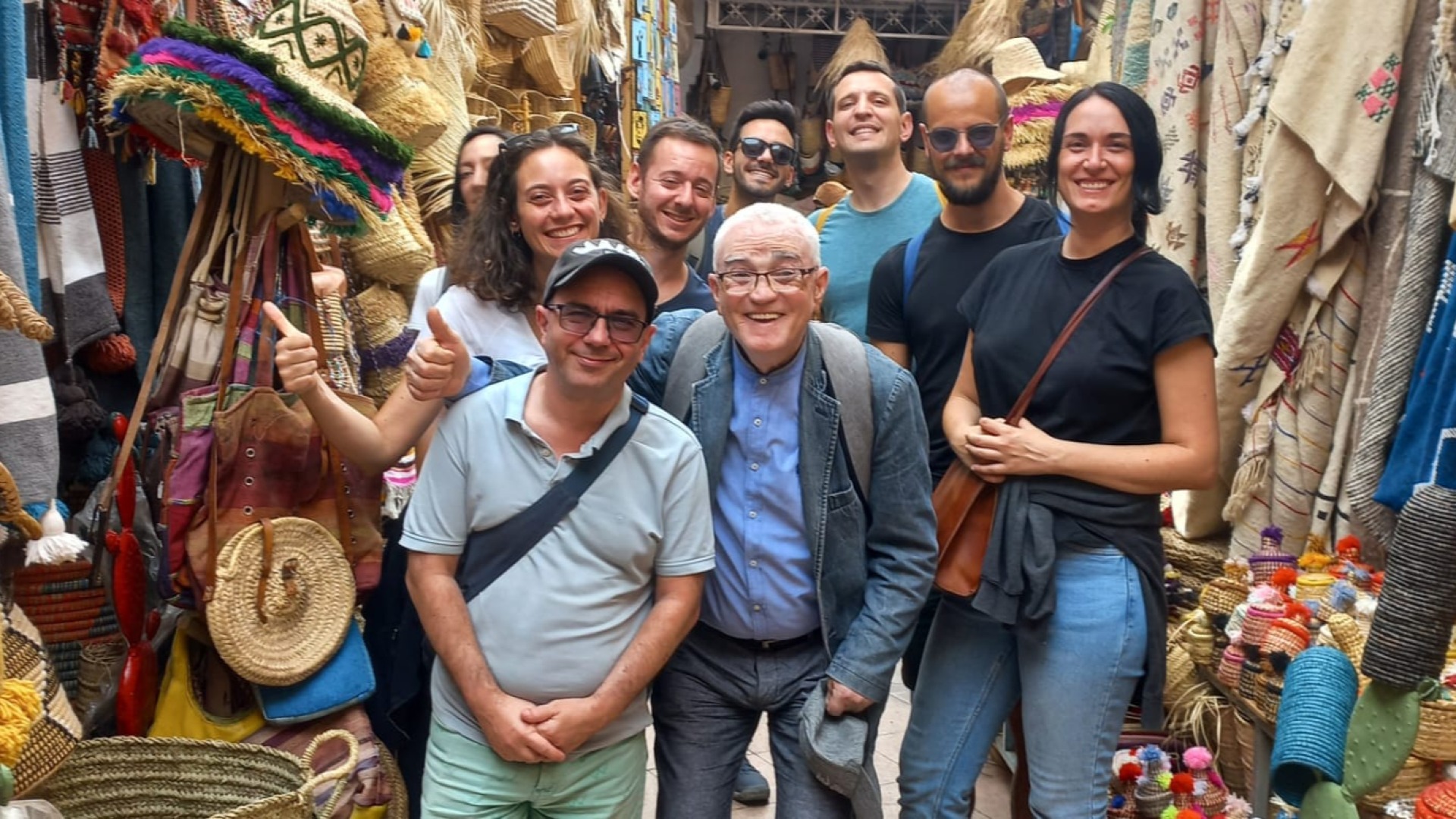
Branching out from Jemaa el-Fnaa, the souks are organized by trade in a way that still reflects centuries of guild history. Souk Semmarine is a major artery into the market district. From there, specialized quarters split off: Souk Zrabi for carpets, Lbiadin for textiles, and Rahba Kedima, the spice square, which announces itself with smell before you see a single stall. Herb pharmacies tucked into the souks sell traditional remedies alongside the spices, another layer most visitors would otherwise miss entirely.
Is Marrakech Safe to Explore Without Getting Lost or Scammed?
Marrakech is broadly safe for tourists, but the medina's layout is genuinely disorienting even for people who consider themselves good with directions. Street names change, signal drops under the covered souk sections, and a paper map stops being useful about ten minutes after you enter.
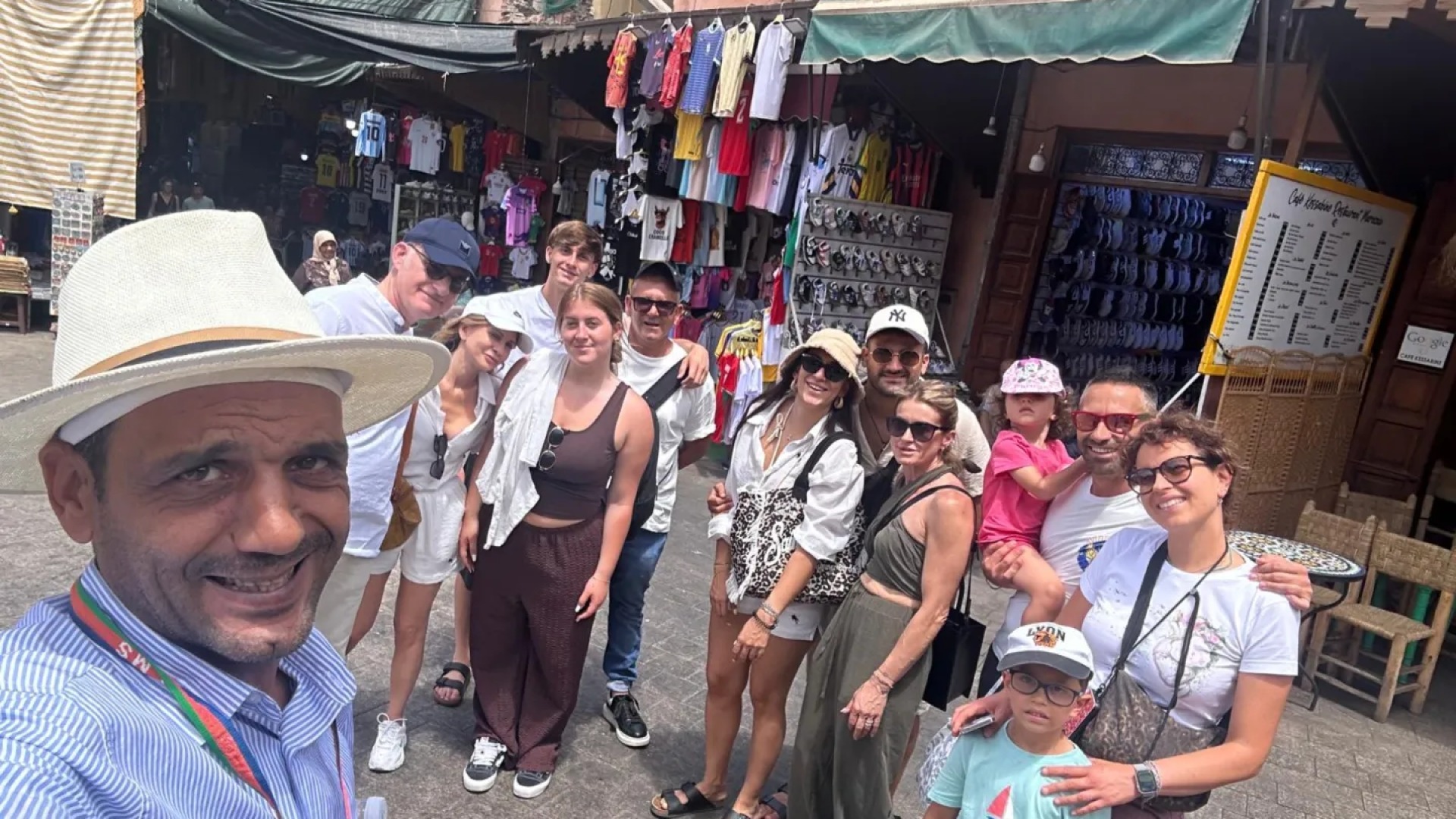
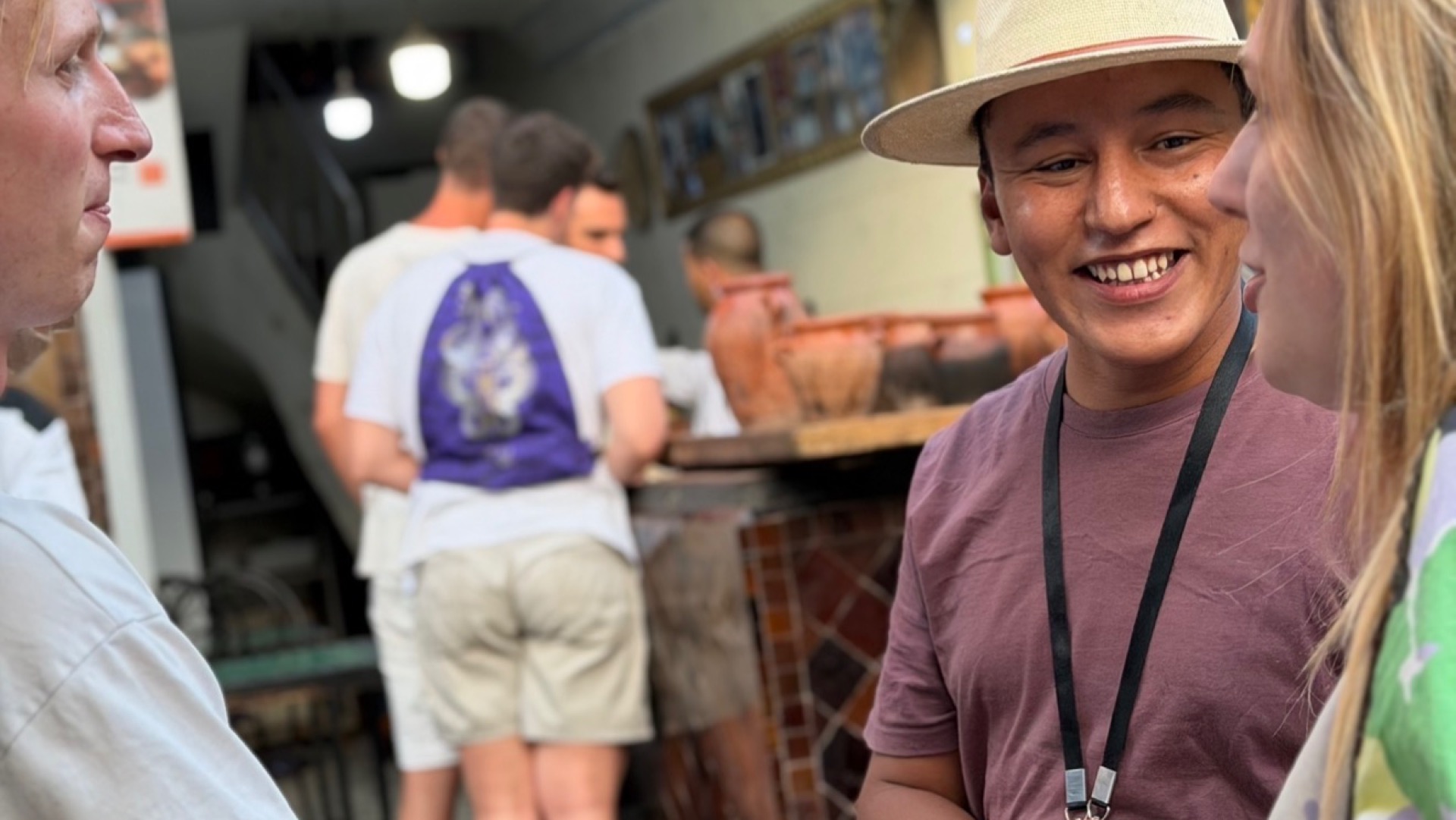
The other pattern to know about is the unofficial "guide" who appears at a confusing corner and offers to walk you somewhere, then steers you toward a shop that pays him a commission. It's rarely dangerous, just an annoyance and a detour from what you actually wanted to see. Walking with an independent local guide, someone like Abderrahman, Pedro, or Youssef, removes both problems at once. You're not staring at a blue GPS dot, you're not an obvious target for a tout, and the six centuries between a public market and an imperial courtyard get explained instead of walked past.
What Should You Wear in Marrakech?
Comfortable, broken-in walking shoes matter more here than almost anywhere else. Medina streets are uneven cobblestone, and a walking tour easily covers three to six hours on foot. Bring water and sunscreen, since the sun reflecting off the red clay walls is stronger than it feels.
Dress modestly, shoulders and knees covered, especially for entry into madrasas and other historic religious sites. It's a matter of local etiquette as much as it is a practical requirement for getting inside.
How Does Tipping and Cash Work in Marrakech?
The local currency is the Moroccan dirham (MAD), and it's what you should have on hand for entrance fees, souk purchases, and tipping a guide. Handing an independent guide foreign banknotes just creates a headache for them: bank lines, exchange fees, and lost time that a quick MAD withdrawal avoids entirely.
Tripvalory's free walking tours run on a pay-what-you-feel-it-was-worth model. There's no upfront cost to book, and at the end of the tour, you tip your guide in dirhams based on the value of the experience.
When Is the Best Time to Visit Marrakech?
Spring and autumn bring the most comfortable weather for walking the medina for hours at a stretch, with summer heat pushing well past what's pleasant for an afternoon on foot. Whatever season you visit, the square itself is worth experiencing at both ends of the day: quiet and unhurried in the morning, loud and theatrical by night.
Ready to Explore Marrakech Like a Local?
Most cities can be understood from a map. Marrakech can't. Its best details sit behind blank facades and unmarked doorways that give away nothing until you're standing in front of them with someone who already knows what's inside.
Visit Tripvalory.com to book a free walking tour in Marrakech. It costs nothing to reserve, you pick your guide and your language, and you pay afterward whatever you think the experience was worth.