
Why does Brazil feel like it holds a dozen different countries in one?
What strikes you first is the smell: the fragrance of nearby roasting coffee blends with diesel and the agreeable odor of a pastel frying at a street vendor's cart. A bus horn sounds. Forró music drifts from an open third-floor window. This is Brazil before the postcard images were produced: loud, warm, and always moving.
Brazil feels like a continent because it almost is one. The Amazon, the beaches of Rio, the colonial towns of Minas Gerais, and the grasslands of the south can't all be seen on a single visit. That is why most tourists choose one route. A less-traveled route passes through Minas Gerais, a mountainous interior state where mining wealth created cities, not just ports.
What determines Brazil's culture and history?
Brazil's history includes both coastal and inland regions. For centuries, the Portuguese lived along the coast and transported sugar and later gold to Europe. In the early 1700s, miners founded mines in the hills of what is now Minas Gerais, shifting the country's focus toward the interior. Towns developed where gold was discovered, and people used the wealth to build baroque churches rather than warehouses. Because of this gold rush, Minas Gerais still differs from the seaside cities, with heavier stone buildings, older churches, and streets that climb rather than extend toward the sea.
In the 1800s, gold gave way to coffee, and Minas Gerais became one of Brazil's principal coffee-producing areas. This wealth led to a new type of city: wide, carefully laid out, and modern for the period. Belo Horizonte, established in 1897 as a deliberately constructed capital, is the clearest example of that era. Today Brazil's food, language, and culture still show the effects of both influences: the relaxed atmosphere of Rio and Salvador on the coast and the formality of the mountain towns that became rich because of gold and coffee rather than tourism.
Which cities should you visit first?
Everyone knows Rio and São Paulo from the postcards and movies—their beaches, skyline, and buzz. But ask Brazilians where they return, and you'll hear about Minas Gerais. Its capital, Belo Horizonte, makes the perfect introduction: a city made for wandering, set within rolling hills, with leafy streets and a relaxed pace. From here, the legendary colonial towns of the state are just a short day trip away.
Belo Horizonte
If you leave Avenida Afonso Pena at Praça Sete, you'll be at the spot where the city was originally planned. Unlike most cities in Brazil, which generally developed around a port or a church, Belo Horizonte was designed on paper before any buildings were constructed. To let mule trains and later cars move goods through the city, the engineers laid out wide boulevards extending from this square, following a grid pattern interrupted by large plazas. This plan is the same one used in Washington, D.C. A few blocks from Praça Sete, the Obelisco marks another intentionally designed line of sight, placed to anchor a boulevard rather than honor a particular event.
You can get a real sense of Belo Horizonte's character at Rua da Bahia in the evening, when the cafés and bars fill as the sun sets, a custom that has continued for decades. It's not only about a single bar, but about the entire street functioning as the city's living room, with office workers, students, and retirees all using the same pavement tables. Nearby is Parque Municipal, a green refuge from the city's layout, planted shortly after the city was founded, where people take breaks between meetings. A few blocks further, Praça da Liberdade reveals another aspect of the city's history, as the former state government palaces now house free museums and cultural centers.
These centers give the political buildings a new and important role instead of leaving them empty.
If you go a little way south, you'll reach Mercado Central, where the focus turns to food: here you can find cheese, cachaça, coffee, and all the specialties of Minas Gerais. It is as much a place to have lunch at the counter as it is a place to shop. To discover why the food of Minas Gerais is famous throughout Brazil and differs from that of Rio or Bahia, hardly more than an hour at the market will tell you more than any travel guide.
What ought visitors to know before going to Brazil?
Getting around Belo Horizonte is easy because the city has a grid pattern, making it one of the simplest Brazilian capitals to explore on foot, especially downtown around Praça Sete, Rua da Bahia, and Praça da Liberdade. That said, keep your valuables hidden and, as in any other Brazilian city center, avoid using your phone on empty streets after dark. Rideshare apps are reliable and the best option for longer trips or when you need to get back to your hotel late at night. Since Minas Gerais is at a higher elevation than Rio or Salvador, the evenings can become cool even if the day has been warm. In this city, layers are more important than sunscreen. When visiting churches, especially older baroque ones, cover your shoulders, although Brazil is generally relaxed about dress codes outside religious sites.
Regarding money and tips: Brazil uses the real (R$). Although cards are generally accepted in the cities, small vendors and the stalls at Mercado Central tend to prefer cash. Restaurants normally include a 10% service charge, so guests aren't expected to leave a tip, but one is welcome if the service is excellent. For pay-what-you-wish walking tours, a tip of about €5 per person (or the equivalent in reais) is appropriate if the guide spent the afternoon with you.
The best time to visit is April through September, since Minas Gerais has a dry season then, and this period is ideal for strolling around Belo Horizonte. Locals say July is the best month because it has sunny weather, cooler temperatures, and no afternoon rainstorms like those from December to March. Standing at the Obelisco while someone traces the boulevard back to Praça Sete and explains why the streets have these particular angles is exactly what a free walking tour fills in.
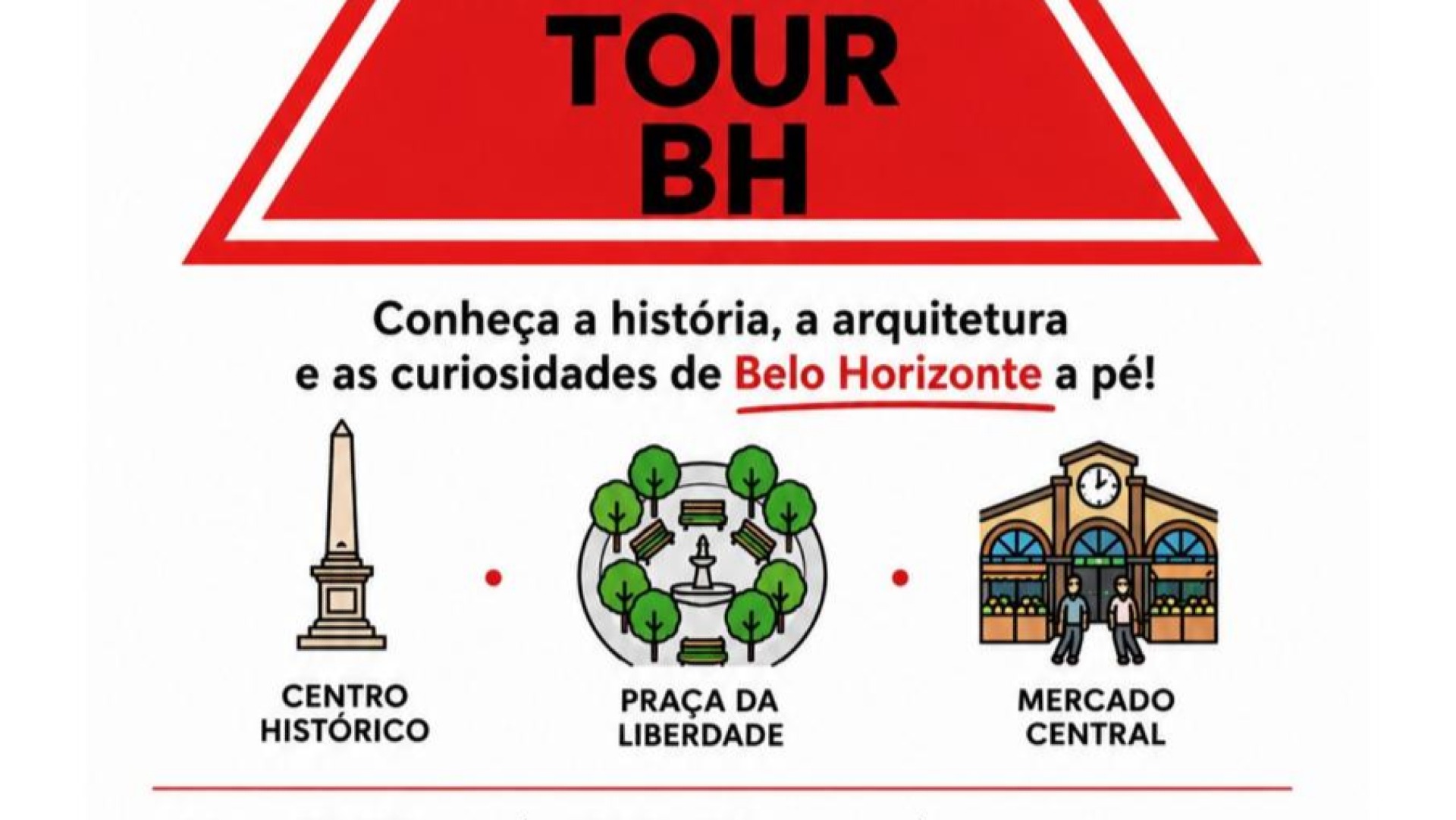
Tripvalory.com matches visitors with local guides in Belo Horizonte who lead them along this route: Praça Sete, the Obelisco, Santuário São José, Parque Municipal, Rua da Bahia, Praça da Liberdade, and Mercado Central. The tour begins at Praça Sete, moves to the Obelisco and Santuário São José, continues through Parque Municipal and Rua da Bahia, then reaches Praça da Liberdade and ends at Mercado Central. Someone who grew up in the city and knows it well explains each place. The tours are free to join and use a tip system, so you pay what you consider appropriate after the experience.
When you are traveling in Brazil and plan to visit Minas Gerais, Belo Horizonte lets you get a sense of the state's history in a single morning. Arrange a free tour with a local guide so someone familiar with the area can show you why the streets curve, climb, and open out into plazas.