
What makes Belo Horizonte different from any other Brazilian city?
You’ll smell Belo Horizonte before you see it. The fragrance of roasted coffee from a padaria on Rua da Bahia blends alongside the scent of fresh pão de queijo cooling on bakery racks. A bus pulls up behind you, and a street vendor shouts out cheese prices from Minas Gerais. By nine in the morning, Praça Sete is already bustling. Office workers cross the square under the stone obelisk, barely looking up. For them, it’s routine, but for you, it’s all new. That’s what makes this place special.
Belo Horizonte isn’t known for beaches or postcard-perfect views like Rio or Salvador. Instead, it’s a city of straight streets and steady character, surrounded by green hills. The avenues were planned before any buildings appeared, and if you walk slowly, you’ll start to notice the considered design.
Why does Belo Horizonte have the appearance and atmosphere that it does?
Most Brazilian cities grew slowly, adapting to obstacles along the way. Belo Horizonte was different. In the 1890s, the Minas Gerais state government decided the old colonial capital, Ouro Preto, was too small. Since Ouro Preto was in a narrow valley that couldn’t be expanded, they picked a small cattle-farming village called Curral del Rey and decided to build a brand new capital there.
Urban planner Aarão Reis designed the city as a grid, taking inspiration from Washington, D.C. and La Plata in Argentina. Wide radial roads cross a checkerboard of streets, and Avenida do Contorno, the ring road, marks the edge of the planned city. The capital opened on December 12, 1897, first called Cidade de Minas. Later, it was renamed Belo Horizonte, or "beautiful horizon," after the hills around downtown.
Because of its grid layout, the city center is easy to navigate, unlike many other Brazilian downtowns. Belo Horizonte has two main sides: the organized 19th-century area around Praça Sete and Praça da Liberdade, and the modern, creative feel of Pampulha, the lakeside district designed by Oscar Niemeyer. This walk features the older part of the city, where the planning is most noticeable.
What are the main landmarks to see in downtown Belo Horizonte?
Praça Sete and the Obelisco
Praça Sete is downtown BH’s main landmark. Named to honor Brazil’s independence, it sits at the crossroads of Avenida Afonso Pena and Avenida Amazonas. The square has always been a popular meeting place. In the center, a stone obelisk marks independence, though locals just call it "the obelisk." Around it, you’ll see newspaper stands, street vendors, and busy buses, making the square lively and more than just a historic site.
Tip: Praça Sete is safe and busy during the day, like most of downtown, but it empties out and feels less safe after dark. If you’re exploring alone, it’s best to leave by early evening.
Santuário São José
This is one of the city’s oldest Catholic churches, just a short walk from the obelisk and surrounded by busy commercial buildings. Inside, it’s peaceful—a sharp contrast to the traffic outside. A local guide can help you appreciate what you’re seeing here.
Parque Municipal Américo Renné Giannetti
The city’s oldest park opened just before Belo Horizonte was officially founded, on September 26, 1897. French landscape architect Paul Villon designed it in the romantic English park style that was popular in Europe at the time. The aim was to make it the largest and most beautiful park in Latin America. Today, you’ll find century-old trees, small lakes, a bandstand, and an orchid house with hundreds of species. It’s the best place downtown to relax. Rua da Bahia used to be the center of the city’s cultural life. In the 1920s, its cafés, bookshops, and sweetshops attracted Brazil’s modernist writers, who spent hours there discussing art and politics while drinking coffee, much like Parisians. Most of the old cafés are gone, replaced by new bars and snack shops, but the street still connects the commercial area near the train station with the government district up the hill.
Basílica Nossa Senhora de Lourdes
A little further down the street, you’ll spot one of the city’s most recognizable churches, with twin spires visible from a block away. People use it more as a landmark than for its interior, and if you mention it to anyone in BH, they’ll know exactly where you mean.
Praça da Liberdade
Praça Sete is the city’s commercial center, while Praça da Liberdade is the official one. Work on Praça da Liberdade began in 1895, when it became the site of the new state government. At its center is the Palácio da Liberdade, which opened in 1898 and was designed by architect José de Magalhães in an elaborate, French-influenced style. The palace features an iron-and-marble staircase from Belgium and English-style gardens by Paul Villon, who also designed Parque Municipal.
In 2010, the government moved out of Praça da Liberdade, and instead of leaving the buildings empty, the city turned most of them into free museums and cultural centers. Now, the Circuito Cultural Liberdade offers more than a dozen places to see art, learn about mining history, and explore community culture, almost all for free. It’s rare to find so much culture in one place without an entry fee.
Mercado Central
Many visitors say the last stop is the most memorable. When Mercado Central opened in 1929, it was just a simple open-air market. Now, it fills an entire city block with over 400 stalls selling Minas cheeses, doce de leite, crafts, and cachaça from all over the state. Minas Gerais is famous for cachaça, so the market is the perfect place to try it, one small glass at a time. For locals, it’s more of a Saturday tradition than a tourist spot, and they often turn a shopping trip into an afternoon with beer and feijão tropeiro at the busy bar counters.
Tip: Many stalls sell similar cheeses, sweets, and cachaça, but prices can vary a lot, even for the same item. It’s a good idea to walk around and compare prices before you buy.
How can one navigate downtown Belo Horizonte without getting lost or being scammed?
The grid layout is actually helpful, not confusing, since the landmarks on this walk are on or near Avenida Afonso Pena. It’s easier to find your way here than in cities with winding streets. Still, a few things might surprise first-time visitors.
Downtown BH is busiest from 8 a.m. to 6 p.m. After businesses close, the area empties out, the streets get darker, and by 9 p.m., places which seemed safe at lunchtime can seem deserted and less safe. This happens in many cities, but it’s more noticeable here than in areas like Savassi or Lourdes, which stay busy and safer in the evening.
The scams here are similar to those in any big city and aren’t unique to BH. Watch out for pickpockets in crowded places like Mercado Central, taxi drivers who take longer routes, and sometimes being short-changed at busy stalls. These things don’t happen often or aggressively, but it’s smart to keep your phone in your front pocket and your bag closed in crowds. Rarely, someone might pretend to be a police officer and ask for a cash 'fine.' Real police don’t ask for money on the street, so you can ask to go to a police station instead.
The metro runs through part of downtown, but this walk is short enough to do on foot. Walking lets you notice small details, like a tiled doorway, a modernist building between two colonial ones, or the smell of a bakery you might otherwise miss.
What attire should you choose and what behavior should you exhibit at religious sites?
Santuário São José and Basílica Nossa Senhora de Lourdes are both active churches, not museums. So, the usual rules apply: men and women should cover their shoulders and knees, avoid bright beachwear, and speak quietly if a service is happening. Neither place has a strict dress code for casual visitors, but it’s respectful to dress for Mass instead than a day at the beach.
In Belo Horizonte, people usually wear casual, comfortable clothes outside of churches. You’ll want good walking shoes for this trip, since downtown has cobblestones and uneven sidewalks, and you’ll be walking a few kilometers. Bring sunscreen and a water bottle too, since the city is over 800 meters above sea level and the midday sun can be stronger than you expect.
How is cash and tipping arranged in Belo Horizonte?
Brazil’s currency is the real (R$), and cash is still common. Most restaurants, shops, and even Mercado Central stalls accept debit and credit cards. Pix, Brazil’s instant bank transfer system, is the main way people pay for almost everything, even small purchases. It’s good to have a little cash for small vendors or street food, but you don’t need much, and it’s not a good idea to carry a lot.
In Brazil, tipping isn’t as common as in the United States. Most restaurants add a 10% service charge to the bill. If it’s not included, it’s nice but not required to round up or leave 10%. For this walk, you can tip whatever you feel the experience was worth. There’s no set amount.
When is the best time to visit Belo Horizonte? The city is over 800 meters above sea level, so it’s cooler and drier than most coastal cities in Brazil. There are two main seasons. The dry season, from April to September, brings sunny days, low humidity, and cool nights. June and July are the driest months and sometimes have no rain. This is usually the best time for long walks around the city center.
The wet season runs from October to March, with the most rain and humidity in December and January. You don’t have to avoid the city then, but afternoon rain is common, so bring a light jacket or umbrella. Carnival, usually in February or March, makes the city lively and crowded. Hotels are more expensive, and the historic center is much busier than usual.
The Best Way to Actually See It
You can stand in Praça Sete and admire the obelisk, wander the cool shade of Parque Municipal, or get lost among the rows of cheese at Mercado Central. But the city’s soul really shows itself when you see it through the eyes of someone who calls Belo Horizonte home. Anyone can follow a map, but only a local can point out the best pastel, share stories you won’t find in any travel guide, or explain why a quiet side street once hosted a famous poet’s debates.
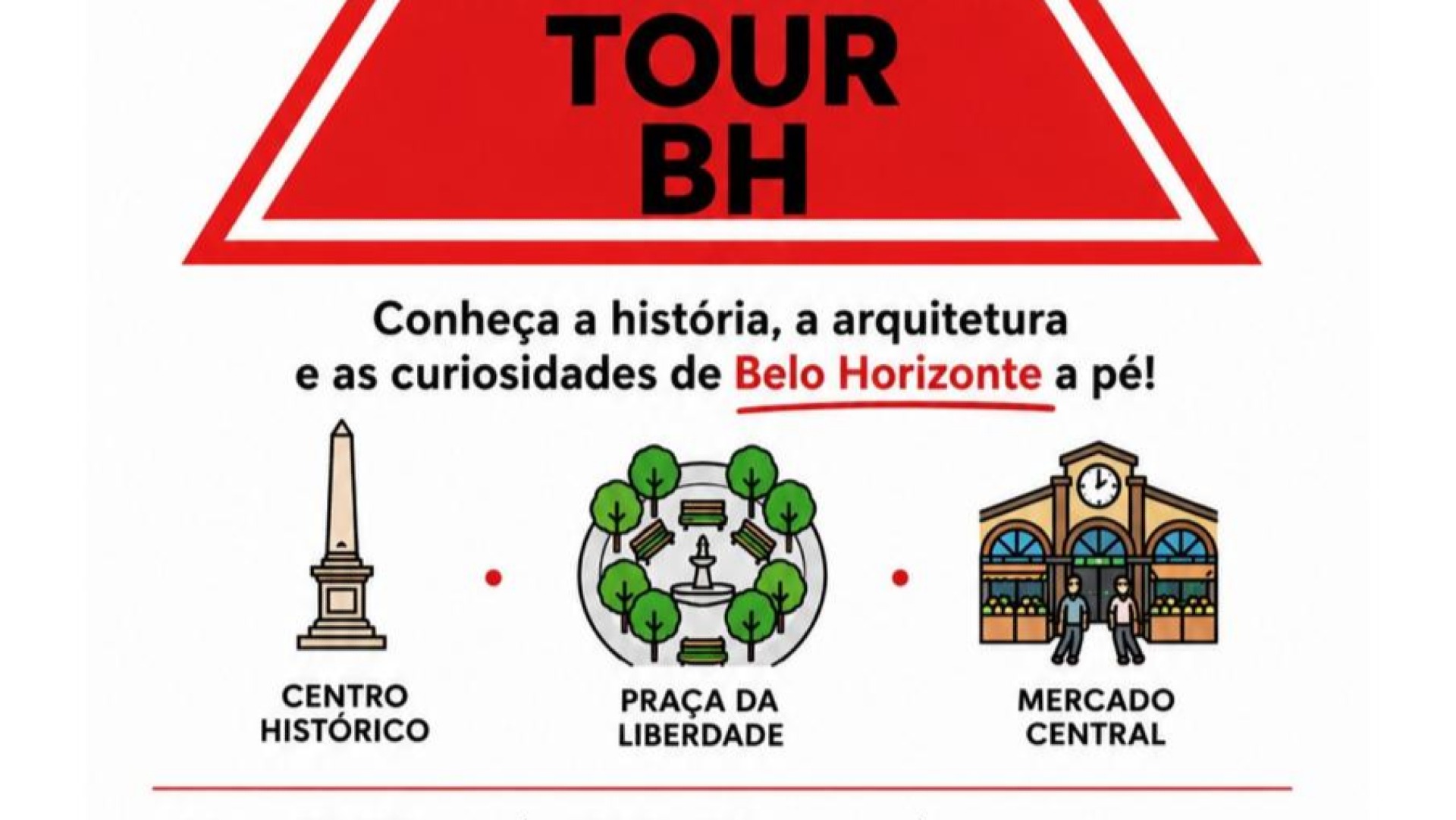
That’s exactly what Tripvalory’s Free Walking Tour BH is all That’s exactly what Tripvalory’s Free Walking Tour BH offers. You’ll join a small group led by a passionate local and walk the city as if with an old friend: no scripts or rehearsed speeches—just the city as it really is. Along the way, you’ll visit top attractions like Praça Sete’s storied obelisk, the peaceful Santuário São José, shady Parque Municipal, the busy Mercado Central, and more. Your guide knows which cheese stall is worth waiting for, where to find the freshest pão de queijo, and the stories behind the statues and streets. Tip what feels right at the end, based on your experience. This is your chance to stroll Belo Horizonte’s downtown with someone who loves it deeply and wants to share all its idiosyncrasies, flavors, and favorite corners.
Book your Free Walking Tour BH and let a local show you the city in a way no map ever could.