
Unveiling the Philosophical Axis: A Sensory Journey Through Yogyakarta
Yogyakarta isn't just a city. Its layout is a physical expression of Javanese cosmology. The straight line running from Panggung Krapyak in the south, through the Sultan's Palace, up to Tugu Pal Putih in the north isn't a coincidence of city planning. It's the Sumbu Filosofi, the Philosophical Axis, laid out in the 18th century by Sultan Hamengku Buwono I and recognized by UNESCO as World Heritage in 2023. Walking part of that line with a local guide from Tripvalory means you're following the same reasoning the city was built around, not just admiring old buildings.
The Sacred Geometry of the City
The full axis represents Sangkan Paraning Dumadi, the Javanese idea of where a person comes from and where they're going. Panggung Krapyak in the south stands for birth and origin. The Kraton at the center represents human life on earth, its duties and trials. Tugu Pal Putih in the north stands for the final goal: returning to God, purified.
This tour walks the northern half of that line, the stretch between Tugu and the Kraton. In the traditional symbolism, that's the paran, the journey toward the destination, not the start of it.
- Tugu Monument: The tour starts here, at the monument that represents the Sultan's spiritual union with his people and with God, the endpoint of the axis rather than its origin.
- Jalan Mangkubumi & Malioboro: The city's main arteries, where daily trade and modern life run directly through the same line the Sultanate laid out centuries ago.
- 0 KM Yogyakarta: The intersection where Dutch colonial buildings sit next to landmarks from the Sultanate era.
- Alun-Alun Utara: The tour's endpoint, the square shaded by twin banyan trees that sits directly in front of the Kraton.
The tour doesn't reach Panggung Krapyak, so it covers half the axis, the half Javanese cosmology treats as the approach to the sacred center, not the full birth-to-divinity arc.
A Culinary Tapestry of Heritage
- Gudeg Yu Djum: The city's signature dish, jackfruit slow-cooked for hours into a sweet, savory stew.
- Ketandan Chinese Town: A walk through the old Chinese-Indonesian quarter, part of Yogyakarta's history long before the Dutch arrived.
- Street Food Rituals: Kopi Jos, coffee served with a live charcoal ember dropped into the cup, and traditional Jamu, herbal tonics rooted in Javanese folk medicine.
Why Explore with a Local Guide?
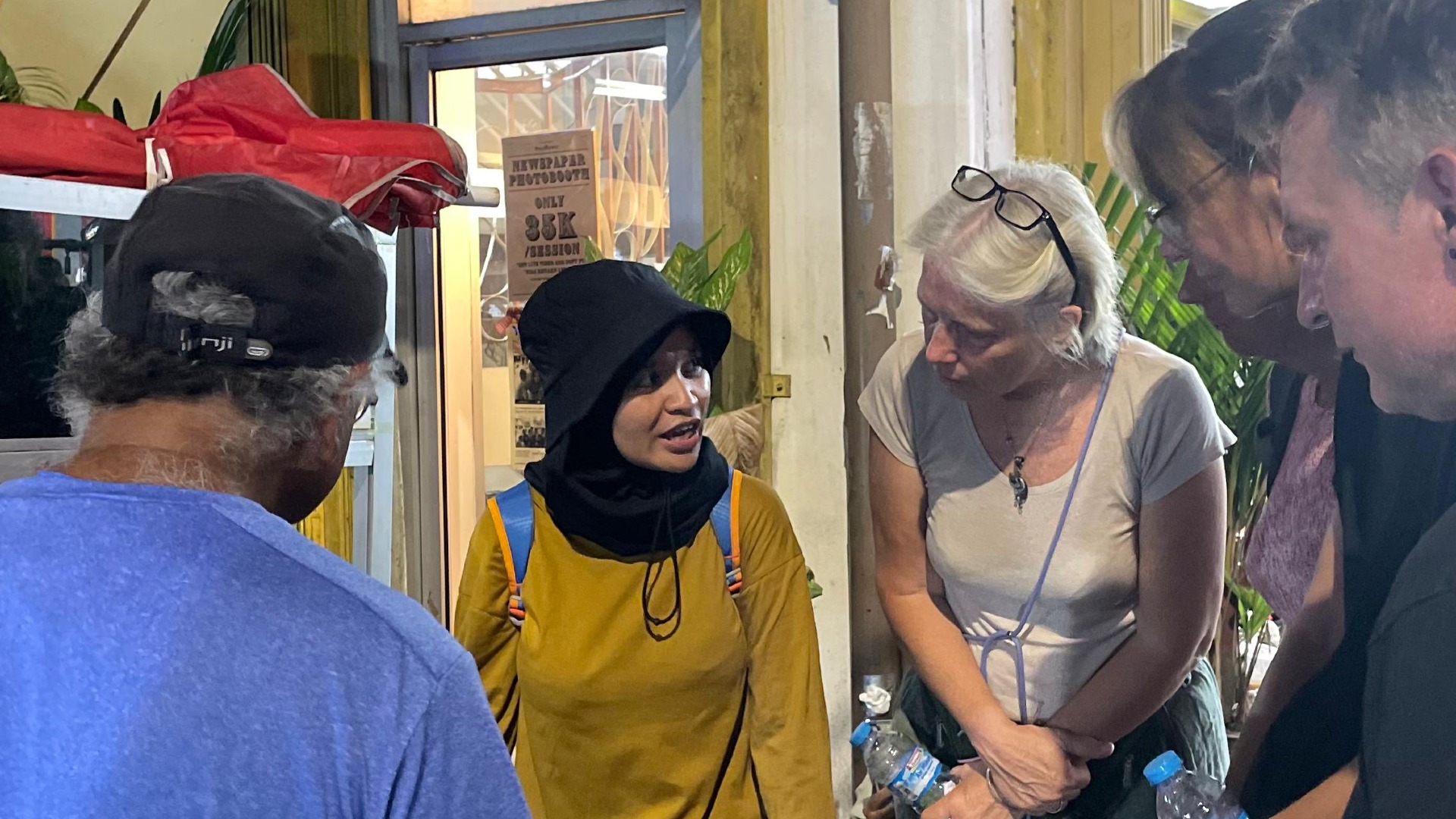
A guide explains why a tree was planted where it was, or why a building sits exactly on the line, the kind of detail you'd otherwise just walk past. They'll also point you toward the quieter corners of Malioboro that most visitors miss.
Essential Traveler Insights
- Seasonal reality: October through March is rainy season. Bring a rain jacket or umbrella.
- Tipping model: The tour is free to book. At the end, you pay your guide what you think the experience was worth.
- Etiquette: These sites hold real significance for local people. Dress modestly and treat vendors and locals with the same patience you'd want in return.
Ready to walk part of the axis yourself?
Visit Tripvalory.com to book. Choose your date, pick your language, and see Yogyakarta the way it was actually laid out.