
Uncovering Prague's architectural layers and overlooked stories
Walking through Prague means moving through several centuries at once: Romanesque foundations under later buildings, Gothic churches over medieval streets, Baroque palaces along the Lesser Town, and modern memorials next to historic synagogues.
Most visitors know Prague by its skyline, but the city makes more sense once you see how its neighbourhoods connect. A walking tour through Tripvalory.com covers the Old Town, Malá Strana, Charles Bridge, and the Jewish Quarter with an independent local guide who explains the people, beliefs, and political shifts behind each stop. The city was shaped by religion, trade, empire, and war, and the tour tries to make that visible rather than just pointing out pretty buildings.
Old Town Square: a good place to start
Old Town Square began as a medieval marketplace, when Prague was becoming a major commercial centre in Central Europe. Merchants, travellers, craftsmen, and religious and political leaders all passed through it.
The buildings around the square show how the city changed over time: Gothic towers next to Baroque façades, Rococo houses, and later restorations. The Church of Our Lady before Týn, with its twin spires, sits alongside the former Kinský Palace and the Old Town Hall. Your guide can also explain why the square has been a site of national celebration, political conflict, and religious change over the centuries.
The Astronomical Clock
Attached to the Old Town Hall, the Astronomical Clock is a medieval representation of time and the movement of the heavens, not just a decorative piece. Its dial, calendar, and moving figures show how closely science, religion, and public life were tied together in the medieval city.
The clock was installed in the early fifteenth century and has been repaired and altered many times since. What visitors see today is the result of both survival and restoration, not something untouched from the Middle Ages. When the figures move, it's easy to focus on the short show, but a guide can point out the symbolism around it: mortality, vanity, commerce, and the idea that the city's order mirrored the order of the skies.
The Jewish Quarter
Josefov was once a separate Jewish settlement with its own institutions, religious buildings, schools, cemeteries, and community life. Many of the original streets are gone, but several synagogues, the Old Jewish Cemetery, and the Jewish Town Hall still stand.
The buildings here need to be read carefully. They're tied to centuries of religious life, restrictions placed on Jewish residents, cultural achievement, and persecution, including periods when the community was confined to this area and periods when it became central to Prague's intellectual and commercial life. A walking tour connects these surviving buildings to the wider city, giving a fuller picture of Prague, one that includes this history alongside the imperial and Gothic landmarks.
The Old-New Synagogue
The Old-New Synagogue is one of the oldest active synagogues in Europe. The name comes from its own history: it was "new" relative to an older prayer house, though it's since become one of the oldest synagogues still standing.
The building is Gothic, with thick masonry and an interior arranged around Jewish religious practice, restrained rather than showy. It's also linked to the legend of the Golem of Prague, traditionally associated with Rabbi Judah Loew ben Bezalel. Your guide can separate the legend from the documented history and explain why the story has stayed such a strong part of Prague's identity.
The Spanish Synagogue
Built in the nineteenth century, the Spanish Synagogue looks very different from the Old-New Synagogue: a decorated interior with ornamental patterns and colours drawing on Moorish Revival architecture.
Its style reflects the changing position of Prague's Jewish community under the Habsburgs. As Jewish residents gained more civic rights and became more integrated into the wider city, some community buildings took on architectural styles associated with modernity and European cultural connection. The contrast between this synagogue and the medieval Old-New Synagogue tracks how religious architecture shifted alongside political and social change.
The Franz Kafka statue
Near the Jewish Quarter is a monument to Franz Kafka, born into Prague's German-speaking Jewish community. His writing often deals with uncertainty, bureaucracy, and alienation within a complicated modern society.
Kafka's Prague isn't found so much in grand architecture. It belongs more to the city's cafés, family businesses, multilingual streets, and apartment buildings, the everyday experience of living between different cultural worlds. The statue adds a more modern, literary layer to the route. It's a reminder that the city's identity was shaped by writers as much as by kings and churches.
Charles Bridge
Charles Bridge connects the Old Town with Malá Strana across the Vltava River. Construction began in the fourteenth century under Charles IV, when Prague was becoming one of the major political and religious centres of the Holy Roman Empire. It was part of a larger building programme that included new roads, fortifications, and public institutions, essential infrastructure rather than just a scenic crossing.
The statues along the bridge were added mostly during the Baroque period, centuries after the bridge itself was built. They give the crossing the feel of an open-air gallery of Catholic imagery. From the bridge you can see the layered city: church domes, red roofs, medieval towers, the river, and Prague Castle on the hill above.
Malá Strana
Malá Strana, the Lesser Town, sits below Prague Castle on the western side of the Vltava. Its streets are narrower and quieter than the Old Town's, but they hold some of the city's best Baroque buildings: palaces, gardens, churches, and former diplomatic residences.
The neighbourhood was shaped by fires, rebuilding, and the influence of noble families; many façades were redone in the Baroque period. Walking through with a guide brings out details easy to miss, like house signs, sculptural decoration, and hidden passageways, and shows the relationship between the buildings and the castle above. The area feels calm today, but its architecture reflects centuries of competition among monarchs, nobles, religious orders, and wealthy citizens.
The Lennon Wall
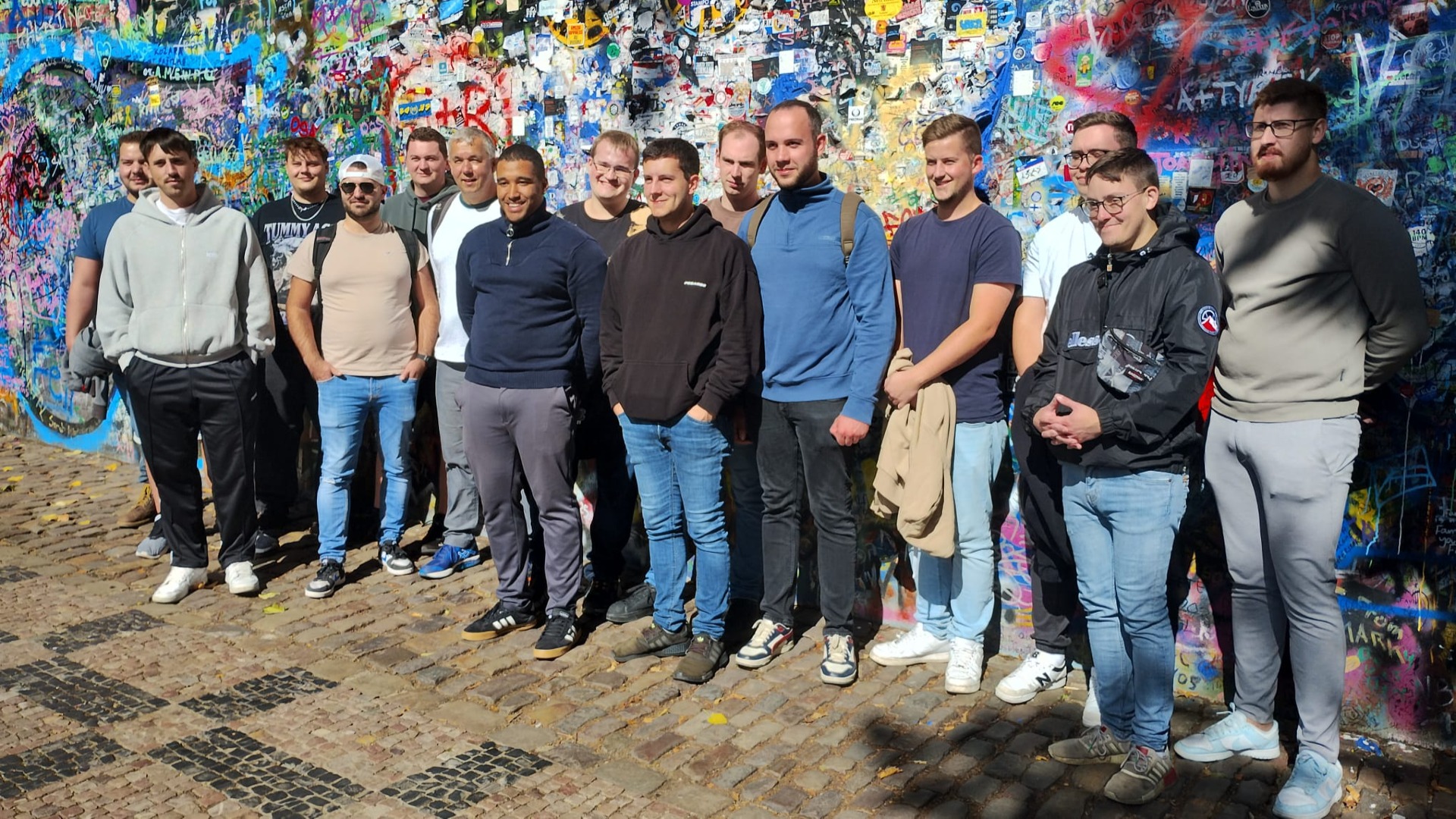
Near Malá Strana, the Lennon Wall shows how a historic city can build new traditions into old surroundings. After John Lennon's death in 1980, people began covering the wall with messages, poems, portraits, and political statements linked to peace and opposition to Communist-era repression. Authorities repeatedly painted over it, and new writing kept appearing until it became a symbol of youthful protest and the push for greater freedom.
It's not a medieval monument or a royal palace. Even so, it's become part of Prague's historic landscape, proof that heritage doesn't only come from governments and architects. Sometimes it comes from ordinary people using a public wall.
Before you join the tour
The route covers several neighbourhoods, moving between Old Town, Josefov, Charles Bridge, and Malá Strana over cobblestones and uneven streets, so comfortable shoes help. Some sites, including synagogues, churches, and public buildings, are typically viewed from outside as part of the walk. Check the Tripvalory booking details if you want to go inside afterward. The Jewish Quarter includes places connected to worship, burial, and remembrance, so it's worth listening closely and following any photography or visitor rules. Charles Bridge gets crowded; an earlier or later departure can mean a calmer walk, though it depends on the season and time of day. Bring a light layer and water, since the route moves between open squares, the riverside, and shaded streets, and keep an eye on your belongings in busy areas.
Ready to Explore Prague Like a Local?
Prague's architecture makes more sense once it's tied to the stories behind it: the medieval marketplace at Old Town Square, the astronomical clock, the synagogues and cemetery of Josefov, Kafka's Prague, Charles Bridge, the Baroque streets of Malá Strana, and the messages on the Lennon Wall.
Visit Tripvalory.com to book the Prague walking tour through the Old Town, Malá Strana, Charles Bridge, and Jewish Quarter, choose your language, and meet an independent local guide who can show you a city built from overlapping histories: Gothic and Baroque, Jewish and Christian, imperial and modern.