
Why Does Lima's Historic Center Feel Like No Other City in South America?
The bells of Lima Cathedral start before you're close enough to see it. You hear them over the traffic on the Plaza Mayor, over the vendors selling cotton candy shaped like clouds, over a street musician working through a huayno on a battered guitar. Pigeons scatter off the cathedral steps in a single motion, like someone shook out a rug. This is the old heart of Lima, the five square blocks the Spanish laid out almost five hundred years ago, and it still runs on the same rhythm it always has: government business in the morning, tourists by midday, and by evening, families out for ice cream under balconies that have watched over this square since before the United States existed.
Why Does Lima's Historic Center Look the Way It Does?
Francisco Pizarro founded Lima in January 1535 and set it out on a grid, with the Plaza Mayor as the anchor and streets running off it at right angles. That grid is why the historic center still feels walkable in a way a lot of colonial cities don't: you can orient yourself off the plaza and rarely go more than a few blocks before hitting a landmark.
The city he built became the capital of the Viceroyalty of Peru, the seat of Spanish power for most of South America, which is why the buildings ringing the old center are so disproportionately grand for a city this size. Government Palace, the Cathedral, the archbishop's residence: these aren't just old buildings, they're what's left of an administrative machine that once ran a continent.
Look up and you'll notice the wooden balconies jutting out over nearly every colonial facade, carved and latticed, some painted deep green or blue. They're not decoration for its own sake. Lima sits in an earthquake zone, and wood flexes where stone cracks, so builders used quincha (a wood-and-cane lattice packed with mud) for upper floors long after they'd switched to stone below. The balconies also let the women of colonial households watch the street below without being seen from it, a detail that tells you as much about the social rules of the time as any plaque would.
What Are the Must-See Landmarks?
San Martín Plaza
Start here, at the plaza named for José de San Martín, the general who declared Peru's independence from Spain in 1821. The square is a lesson in reading monuments: San Martín's statue sits at the center on horseback, and just below him is a smaller figure of a woman wearing a headdress of flames, meant to represent the Republic. A translator misread the Spanish word for flame, "llama," as the animal, and for a while a real llama statue almost got added to the base by mistake. It's a small story, but it's the kind locals bring up with a grin, because it captures something true about how history gets garbled in the retelling.
From San Martín Plaza, the walk into the old city proper begins.
La Merced Church
A few blocks in, La Merced's carved stone facade stands out even on a street full of churches. It marks the spot where the first Catholic mass in Lima was said, back when the city was barely a settlement, and the building that stands now grew up around that original chapel over generations of rebuilding after earthquakes. Inside, a cross belonging to Padre Urraca, a friar credited with miracles in the 1600s, still draws people who come to touch it and ask for something.
Monument to Ramón Castilla
Ramón Castilla served as president of Peru twice in the 1800s and is remembered, above other things, for abolishing slavery in Peru in 1854. His monument is easy to walk past if you don't know what you're looking at, but knowing that detail changes how you see it: a memorial to a real abolition, tucked into an ordinary corner of the old city rather than given its own grand plaza.
Government Palace
Government Palace sits on the same ground where Pizarro built his own residence when he founded the city, which makes it one of the few places in Lima where five centuries of political power have occupied the exact same spot. The current building, with its French-influenced facade, dates mostly to the early twentieth century, after fire and earthquake took earlier versions down. This is still the working office of Peru's president, so you're looking at a functioning seat of government, not a museum piece.
Lima Cathedral
The cathedral anchors the Plaza Mayor and holds the remains of Francisco Pizarro himself, in a glass-sided tomb in a side chapel just off the main nave. Like most of the historic center, it's been rebuilt more than once after earthquakes, most seriously after the 1746 quake that flattened much of colonial Lima. What you're walking through is technically an eighteenth-century reconstruction wearing a sixteenth-century name, which is true of a surprising amount of "colonial" Lima once you start asking dates.
Casa O'Higgins
Named for Bernardo O'Higgins, the Chilean independence leader who spent his final years in exile here, this colonial house is a quieter stop than the plazas around it, and that's part of its value. It's a chance to see a residential interior from the period rather than another government facade, and O'Higgins's presence here is a small sign of how tangled Lima's independence-era history is with the rest of South America's, not just Peru's own.
Old Train Station (Desamparados)
Most visitors walk right past Desamparados without a guide, and that's the point of including it. Built in the early 1900s to serve the central railway into the Andes, its glass ceiling and iron framework belong to a completely different architectural moment than the colonial buildings surrounding it, industrial-age engineering dropped into a Spanish colonial grid. The trains stopped running long ago, but the building survived, which is more than can be said for most of Lima's original railway infrastructure.
Casa de la Literatura
Housed inside the old train station complex, Casa de la Literatura Peruana is dedicated to Peru's literary history, and it's an easy stop to underrate if books aren't your thing. What makes it worth the few minutes is less the exhibits and more the building itself: a piece of transportation infrastructure turned into a library and gallery, which happens all over Lima's historic core once industries move on and buildings need new reasons to stay standing.
Changing of the Guard
Outside Government Palace, the changing of the guard happens around midday and draws a genuine crowd, tourists and locals both. It's a formal military ceremony with a marching band, not a photo-op staged for visitors, and the timing is worth building your walk around if you want to catch it.
San Francisco Church and Catacombs
San Francisco's church is worth seeing for its Sevillian tilework alone, but the real reason people line up here is underneath it: catacombs where an estimated seventy thousand people were buried before Lima had a public cemetery. Bones are arranged in geometric patterns in some chambers, a colonial-era practice for organizing remains as space ran out, and walking through them is a very different kind of history than reading a plaque about a president.
Parque de la Muralla
The walk ends at Parque de la Muralla, built around a surviving stretch of the wall that once encircled colonial Lima, protection against pirate raids and indigenous uprisings that never fully materialized the way the Spanish feared. Most of the wall came down in the 1800s to let the growing city expand, so this fragment, with the Rímac River running alongside it, is one of the only physical traces left of the city's original edge.
How Do You Navigate the Historic Center Without Getting Lost or Scammed?
The colonial grid makes the historic center genuinely hard to get lost in, at least within its core blocks. The Plaza Mayor is your anchor: if you're turned around, walk toward the cathedral towers and reorient from there.
The more useful warning is about what to avoid rather than how to find your way. Street currency exchange, no matter how good the rate looks, is a common setup for counterfeit bills or short-changing, and there's no reason to use it when banks and casas de cambio are a few blocks away. Distraction theft (something spilled on your shirt, a sudden commotion nearby) is the classic pickpocket setup here as in most heavily touristed city centers, so keep your bag in front of you and don't dig for your phone every few minutes. Unlicensed taxis outside major sites tend to overcharge tourists badly; if you need a ride, use an app or a taxi called from your hotel rather than flagging one down on the plaza.
None of this makes the historic center dangerous during the day. It's one of the more heavily policed and monitored parts of Lima precisely because it's the main tourist draw, and the biggest risk most visitors actually run into is overpaying for a llama-wool alpaca sweater that's actually acrylic.
What Should You Wear and How Should You Behave?
Lima's historic center sits at a mild, humid climate most of the year, so comfortable walking shoes matter more than any particular jacket; the cobblestones and uneven colonial sidewalks are hard on flip-flops and thin soles. Layers help, since the coastal fog (locals call it garúa) can make mornings feel cooler than the afternoon.
Inside churches like La Merced or the cathedral, shoulders and knees covered is the general expectation, and it's worth having something to throw on even if you're touring in shorts and a tank top on a warm day. Photography inside churches is often restricted, particularly around active worship areas or the catacombs at San Francisco, so check before you raise a camera.
How Does Tipping and Cash Work in Lima?
Peru's currency is the sol (PEN), and while cards are widely accepted at restaurants and larger shops in the historic center, small vendors and some entrance fees are cash-only. It's worth carrying small bills and coins, since many places genuinely can't break a 100-sol note for a 5-sol purchase.
Tipping isn't as rigidly expected as in the US, but it's appreciated and increasingly standard: 10 percent at sit-down restaurants if a service charge isn't already included, small change for luggage help or informal services, and for a free walking tour, whatever you'd have paid for a formal one, based on how much value you got out of it. That last model is worth understanding before you show up to one.
When Is the Best Time to Visit?
Lima's dry season runs from roughly May to October, with cooler temperatures and heavy coastal fog that can mute the sun for days at a stretch without actually producing rain. December through April is warmer and sunnier, which is Lima's summer and its busiest tourist stretch, so expect more crowds and higher prices around major sites. Neither season shuts down the historic center; the plazas and churches are a year-round draw, and the choice mostly comes down to whether you want sun or lighter crowds more.
Walking It With Someone Who Knows the Streets
All of this, the flame-headdress mix-up on San Martín statue, the tomb hiding in a side chapel most people walk past, the reason a nineteenth-century train station ended up full of books, is the kind of detail that turns a plaza from "pretty old building" into a story you actually remember. A guidebook can hand you the dates. It takes someone who grew up walking these blocks to hand you the reasons.
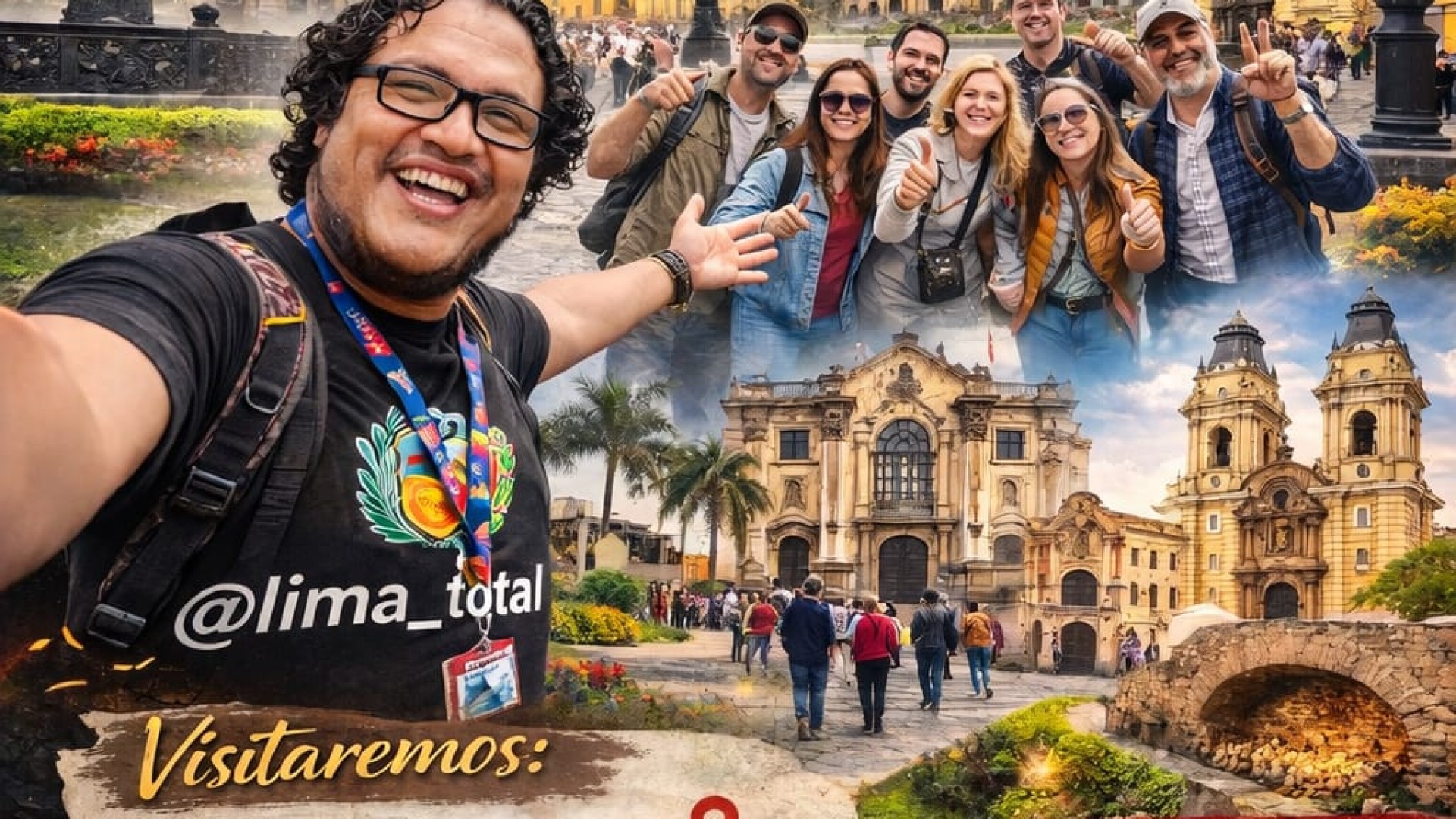
That's the gap Tripvalory's local guides fill. Lima Total's free walking tour through the historic center runs close to two hours, starting near San Martín Plaza and moving through every stop above at an easy pace, with a guide who lingers where lingering is worth it instead of rushing you toward a checklist. There's no upfront cost. You pay at the end, whatever you feel the two hours were worth, which tends to produce guides who'd rather earn a good tip through a genuinely good tour than phone it in for a flat fee. If you're planning a day in Lima's old city, it's a low-risk way to see it properly, with someone who already knows exactly which corner the llama story comes from.