
Zanzibar on Foot: Exploring Stone Town's Maritime Labyrinth
The internet is crowded with identical descriptions of Zanzibar. If you spend a few minutes searching, you will encounter the same recycled phrases about pristine white beaches and turquoise waters. But anyone who has actually stepped off the sand and walked inside the ancient coral-stone walls knows a fundamental truth. Zanzibar cannot be summarized in a resort brochure, and its true essence resists any checklist.
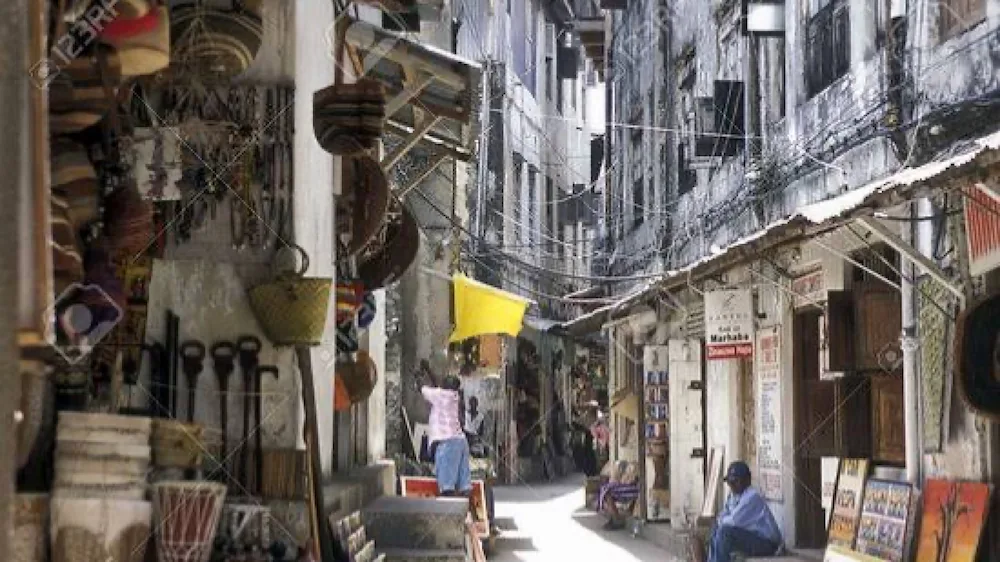
Standard paper maps and compass headings frequently falter in the five-century-old maze of Stone Town. Street signs take a back seat to local landmarks. This is not a structural flaw. It was engineered for the human scale, built for a time when the only way to navigate a global trading hub was to walk its paths and speak to the people who held its memory.
As we introduce our second official destination on Tripvalory.com, we chose Zanzibar for this exact reason. Stone Town is not a place you merely look at from a carriage or car window. It is an intricate, historic environment you must experience directly. The only true way to experience it is on foot, guided by someone who understands its unspoken codes.
The Geometry of Trade: A Welcoming, Open-Ended History
To truly understand Zanzibar, you must look at the ocean currents and the mindset of the merchants who built it. Established as a prominent coastal settlement starting in the 10th century, the island became the crown jewel of the Indian Ocean trade routes. It sat at a major crossroads where Monsoon winds brought Arab, Persian, Indian, and African traders together along a single tropical coast.
Unlike inland historic cities where wealth is fiercely guarded behind private, blank walls, Stone Town's architecture is uniquely defined by a tension between security and display. The city was built using local coral rag and lime, giving it a distinctive, weathered texture that absorbs the tropical sun.
The most striking feature of this architectural heritage is the famous carved Zanzibar door. Made from heavy teak or mahogany, these massive entryways were the merchant's calling card. A door with brass spikes speaks to an Indian origin, designed historically to repel war elephants; a door framed with delicate floral carvings of frankincense and date palms reflects Arab lineage; while the Swahili geometric carvings ground the structure in the East African coast. Here, history is not hidden in courtyards—it is carved directly onto the street-facing threshold of every home.
A Closer Look at Coastal Engagement
Today, Zanzibar captivates global travelers because it introduces a necessary, brilliant friction to travel. In a world designed for passive consumption, where you can cross a destination in an insulated carriage without looking a single local in the eye, Zanzibar demands active participation.
You cannot navigate Stone Town passively. You must learn the physical etiquette of sharing narrow alleys with heavily laden bicycles and passing neighbors. You must ask for directions, negotiate tight corners, and engage in the slow, conversational choreography of the spice vendors. The city forces human-to-human contact, turning a simple walk into a series of genuine social transactions.
Exploring the Monuments: A Look at Spatial Transitions
When visiting Zanzibar's major historical landmarks, standard guidebooks focus strictly on dates and sultanates. A localized, pedestrian perspective instead examines how these historic spaces shape human perception.
-
The Old Fort (Ngome Kongwe)
Built in the late 17th century by Omani Arabs on the ruins of a Portuguese chapel, the Old Fort is Stone Town's oldest surviving structure. Its massive, square, dark orange walls command the seafront. Passing through the fort's low-arched stone entryway from the open, bright ocean air creates an immediate shift in scale. The air grows cooler, the sound of the waves dampens, and you find yourself standing in a vast, open courtyard that once served as a defensive shield and now acts as a peaceful cultural center.
-
The House of Wonders (Beit-al-Ajaib)
Once the tallest building in East Africa, this grand palace stands on the waterfront as a monument to sheer scale. Its towering white pillars, sweeping external verandahs, and soaring central courtyard were designed to project power and international prestige across the Indian Ocean. Looking up at its structural footprint from the street level, you immediately feel the architectural collision of Victorian industrialism and Omani imperial design.
-
The Former Slave Market Site
A short walk from the seaside sits a site of profound historical weight. The monument uses physical compression and heavy shadow to evoke reflection. Entering the preserved underground holding chambers—low, dark, and claustrophobic—creates an immediate, visceral impact before you step back out into the light of the Anglican Cathedral built directly over the former whipping post. This spatial transition is designed to ensure the weight of history is felt, not just read.
Living Traditions and the Joyful Rhythms of Everyday Life
Beyond the grand architecture, Zanzibar's true magic is woven into its intangible traditions—daily rituals passed down through generations.
-
The Art of Karibu
Derived from the Arabic word for "welcome," hospitality on the Swahili coast is a highly active social grace. You will hear "Karibu" shouted across narrow alleys, not as a sales pitch, but as a genuine acknowledgment of your presence.
-
The Spiced Coffee Ritual
Near the Jaws Corner plaza in the heart of Stone Town, locals gather daily around a charcoal stove. Here, black coffee brewed with fresh ginger, cardamom, and cinnamon is served in tiny porcelain cups. It is a sharp, warming drink meant to be sipped slowly while discussing community news, serving as the neighborhood's social anchor.
-
The Heritage of Dhow Building
At the water's edge, the ancient traditions of the maritime guilds remain entirely alive. You will hear the rhythmic striking of adzes shaping mahogany hulls, see artisans sewing heavy canvas sails, and witness sailors navigating the shallow reefs using celestial knowledge that predates written charts.
The Tripvalory Philosophy
If you visit Zanzibar with a standard itinerary, you will only see the outer shores. You will miss the inner logic of the alleys, the rhythm of the daily tidal changes, and the subtle cues that signal where the ancient trading port ends and modern island life begins.
We built Tripvalory because spaces this complex require human translation. The true value of a tour isn't just getting from one point to another; it is understanding the invisible world between them. Step onto the pavement, leave the generic guides behind, and let a local guide show you how to read Stone Town truly