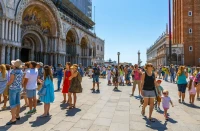


You know your city better than any travel guide. You know which bakery opens early, which alley hides the oldest wall, and which stories the plaques miss. Share that knowledge with others on a free walking tour. A free tour is different from a regular ticketed tour. Travelers book without paying upfront. They join the tour, and at the end, they decide what it was worth and tip the guide. This is why it's also called a pay-what-you-wish or tip-based tour. In many cities, starting a free tour is easier than beginning a traditional guiding career, though rules differ by location. This guide is for curious locals and professional guides considering the free walking tour model. We'll explain how a free tour works, walk through the steps to become a guide, and finish with tips on starting a free tour business in 2026.
How does a free tour guide get paid?
A free tour does not mean the guide works for free. It means guests pay after the tour, not before. Here's how it usually works:
- The guest books at no cost. No card, no deposit, no ticket price.
- The guest joins the free walking tour. Most run about two to three hours, so the guide has time to tell the full story.
- The guest tips at the end. They pay what they feel the tour was worth, in cash or digitally where the guide offers it.
Since guests choose how much to tip, a free tour guide's income can change from tour to tour. It depends on group size, season, city, and especially the tour's quality. Good guides explain the tip-based model at the start, without compulsion, so everyone knows what to expect. Reviews are also important because they help attract new guests. A free tour does not guarantee a steady salary. It helps you build your reputation, one good walk at a time. Guides who focus on quality from the start usually do best.
Free tour guide, licensed guide, or Google Local Guide?
"Become a guide" and "become a local guide" can mean different things depending on what you are looking for. Here is how to tell the difference.
A free tour guide leads walking tours where guests tip at the end. In many places, you do not need formal qualifications to start, and you build your reputation through reviews. This guide focuses on this path.
A licensed tour guide holds an official certification where a city or country requires one to guide, often for specific sites or for paid tours. Getting licensed usually means exams or a training course, and the requirements vary widely by country. Some licensed guides also lead free tours, and we'll cover that in the professionals section.
A Google Local Guide is something else entirely. Google Local Guides is a Google Maps community program where people write reviews, add photos, and correct place details, and earn points and badges for it. It helps others find good places, not lead tours. If that's what you were looking for, Google's own program page is the right place to start. If you love your city and want to share it by walking with travelers and telling stories they won't find on a map, you are in the right place. Your next step is to choose a neighborhood, shape a story, and start with a free walking tour.
How to become a free walking tour guide, step by step
You do not need a big plan to get started. You need a story to tell, a route people can follow, and the nerve to lead your first group. Your next step is simple: begin with the six steps below.
1. Pick your neighborhood and your story
Do not try to cover the whole city. Pick one area you know well and one main theme, like a medieval quarter, street art, a food market, or a story about rival families. A clear theme makes your tour easy to describe, easy to remember, and unique.
2. Research beyond the guidebook
Guests can read a guidebook on their own. They want the details only a local can share. Read local history, talk to longtime residents, visit small museums and archives, and verify your facts. If you are unsure about something, leave it out or say so honestly. Trust is what leads to great reviews.
3. Design a route of about two to three hours
Plan a walkable route with a clear meeting point that is easy to find and describe. Consider where the group can stop safely, where there is shade or shelter, and where a bathroom break fits in. Allow extra time, since groups often walk slower than expected. End the tour somewhere pleasant, like near a café or a viewpoint, where guests can relax and thank you.
4. Practice on friends first
Try your full tour with a small group of friends or family before listing it. Time each stop, see where people lose interest, and ask for honest feedback. Practicing twice will teach you more than reading about it.
5. Create your listing
Write a title and description that clearly explain what guests will see and learn. Use simple expressions like "free walking tour" so travelers can find you. Add a clear photo, the meeting point, the language, the duration, and a reasonable group size. Small groups often feel friendlier and get better reviews.
6. Lead your first free tour
Welcome your guests, briefly explain how the tip-based model works, and then start your story. Tell it with energy and keep the group together. At the end, thank everyone, mention that reviews are helpful, and let guests decide what to tip. Afterward, note what went well. Your next tour will be even better.
Already a professional guide? Why try a free tour
If you already have a license or years of guiding experience, a free walking tour isn't a step down. For many professionals, it is another way to do the work they enjoy. Free tours bring you new guests. Travelers who might not book a private tour at first are often happy to join a free tour. A great experience can lead to private bookings, repeat visitors, and recommendations. Free tours help fill quiet hours. If you have gaps between private or group bookings, a free walking tour can turn that time into work and more reviews. Free tours help you build proof. Public reviews from real guests build trust that is hard to earn otherwise, especially when you are building your reputation. There are trade-offs to consider. Income can vary because guests choose their own tip, and you may guide larger, more varied groups than with private clients. Some professionals use free tours to attract guests and rely on private tours for their main income. If your city or country requires a guide license, your current credentials will help. Make sure a free tour fits within your local rules.
How to start a free tour business in 2026
Running one good free walking tour makes you a guide. When your tour regularly fills up, you can start building a free tour business. Your next step is to grow from one tour to many.
1. Prove one signature tour first. Run your first free tour until it earns steady bookings and good reviews. Everything else grows from that proof.
2. Add variety, not just more tours. Try a second theme, another language, or a different time of day to reach more people without overextending yourself. In 2026, most travelers still find tours through search and reviews, so a clear title, a strong photo, and honest reviews matter.
3. Bring in other guides carefully. When your schedule is full, train friends or colleagues to lead your route or new ones. Quality is important, so show each new guide your stories, timing, and how you explain the tip model.
4. Offer free tours alongside paid ones. Many guides use the free tour to welcome guests and also offer private or specialty tours for those who want more time or a custom experience.
5. Treat it like a business. Keep records of bookings, costs, and tips. Separate your personal and business money, and check your local registration and tax rules, as they vary. A local accountant can help you with this quickly.
6. Protect your reviews. Reviews are your most valuable asset. Keep group sizes manageable so you can connect with everyone, and ask satisfied guests to share their experience.
Where to list your free tour
Once your route is ready, you need a place where travelers can find and book your tour. Three main options exist, and many guides use more than one. Dedicated free tour platforms. These are built around the tip-based model and connect guides with travelers looking for a free walking tour. GuruWalk and Tripvalory are two examples, among others, as are your own channels. A simple website, a social media page, and a Google Business Profile let people find you directly, keep your reputation in your hands, and support local partnerships. Hostels, guesthouses, and cafés often send visitors to a good local guide. Before choosing a platform, compare a few things: fees, how tips are handled, whether tours need approval before going live, how reviews work, and which cities and languages are included. Read the terms, choose one platform to start with, and then see how it works for you. Guides can register for a Business account, build a profile, and list their tours; both volunteer locals and professional guides are welcome. You can find details in the Help Center.
Do you need a license to guide a free tour?
It depends on where you live. Some countries and cities require a license or registration to guide, while others don't, and the rules can differ between paid and tip-based tours. Before your first tour, check with your local tourism authority. To see what a platform requires of its guides, read its terms. On Tripvalory, you'll find them in the help center under/terms; follow the steps there.
Frequently asked questions
What is a free tour? A free tour, or free walking tour, is a guided walk that guests book without paying up front. At the end, they tip the guide whatever they feel the tour was worth.
How do I become a tour guide? Choose a place and a story you know well, research it carefully, design a 2- to 3-hour route, practice with friends, and list your tour on a platform or your own channels. If your area requires a license, get it first.
How can I become a tour guide with no experience? Start with a free walking tour. It's a relaxed way to learn to lead a group, and reviews from your first guests become your proof of experience.
How do you become a local tour guide? Pick the neighborhood you know best and offer a tour of it. Your local knowledge, stories, and shortcuts are what travelers are looking for.
How do I become a local guide? It depends on what you mean. To lead tours, follow the steps above. If you mean the Google Maps program, Google Local Guides is separate: you earn points for reviews and photos, and it doesn't involve leading tours.
What is a walking guru? People use the phrase for guides on free-tour platforms such as GuruWalk, which run on a pay-what-you-want model. You can join one or several, so compare fees, terms, and reviews first.
Do free tour guides get paid? Yes, through tips. Guests choose the amount, so income varies with group size, season, and tour quality.
Can I become a guide without a license? In some places, yes. In others, no. Rules vary by country and city, so check locally before you start.