


Introduction
Tourism is inherently an exercise in movement. People cross borders every day to experience the majesty of mountains, marvel at monuments and absorb the beauty of coastlines. However, in the past decade we have witnessed what can only be described as a culinary revolution within the world of tourism.
Travelers are no longer simply going places they want to taste them. A trend known as ‘culinary tourism’ started off as a niche pursuit for the ultra serious food blogger (and, dare we say, Michelin chaser), but today is one of the fastest growing segments of the globe’s tourism economy.
Take our host country, the North African Kingdom of Morocco, for example. It is perhaps best known globally for its vibrant markets, stunning landscapes and rich culture, but these days when tourists visit the nation they’re far less likely to leave hungry than with full bellies from delicious meals prepared by local chefs. As such, Morocco’s culinary heritage is now a major asset in its efforts to attract tourists while preserving its unique national identity.
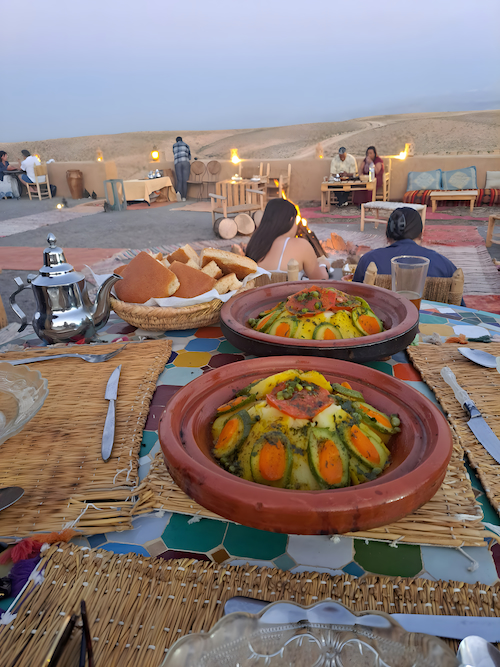
Food Tourism: A Global Phenomenon
According to the World Food Travel Association, “a majority of international travelers consider culinary experience a defining component when choosing destinations, as well as activities during travel.” To me, that means two things. One, you should probably visit your favorite cuisine’s homeland if you haven’t already. And two, I need to stop writing so much about restaurants and start writing about how delicious life is outside of them.
We live in a world of Instagram photos of landmarks, but sometimes those pictures can’t capture the depth of a place. If you’ve ever tasted a bowl of Vietnamese pho sitting on a plastic stool in Hanoi, or shared a bottle of sangria while devouring platters of tapas in a Seville bar, then you understand this sentiment. We consume the cultures we travel to through our palates, which gives us a unique perspective into them beyond postcards.
Economically, food travel is also extremely lucrative for host countries. According to Statista, the amount spent by culinary travelers was $254 billion USD in 2017 significantly more than the average tourist spends. As a result, many countries are launching national branding initiatives focused solely on showcasing local cuisine. Whether it be Italy’s campaign highlighting regional pasta dishes, or Japan’s efforts to make kimchi popular again, these marketing pushes will keep tourists coming back hungry for more.
Morocco: A Case Study in Culinary Diplomacy
Morocco provides one of the best case scenarios for seeing how gastronomy plays a role in national tourism strategy. According to figures provided by Morocco’s Ministry of Tourism, the North African nation saw a record number of international travelers come through its gates in 2025 nearly 20 million people. This represents a significant jump compared to recent years but makes sense considering Morocco’s push for a diversified approach to tourism.
More broadly, the nation recorded record tourism receipts (over 13 billion dollars) that year, with tourism accounting for over 7 percent of national GDP today. Some of the growth stems from improved connectivity via flights, but even many insiders admit that there was another factor behind increased numbers: immersion in local culture and food.
Moroccan cuisine mixes up many different influences including Berber, Arab, Andalusian, and Mediterranean styles into a unique set of dishes that include everything from slow cooked tagines to saffron scented couscous to pastilla and even ceremonial mint tea sipping. So how have Moroccans used their love of food to enhance the appeal of visiting?
Food experiences are big business in places like Marrakesh and Fez. From taking cooking classes held within riads to wandering around spice markets with your own personal guide to joining food tours traversing the city’s medinas, there are plenty of opportunities to savor Moroccan cuisine while visiting.
The number of culinary festivals throughout the country that draw international attendees continues to rise a fact noted by those working in tourism as further proof of how fast this area of travel is growing. Even traditional forms of tourism, such as desert trips, have seen an infusion of the gastronomy angle, where tourists might find themselves learning to bake bread in sand ovens on a multi-day journey deep into the heart of the Sahara, or they may be invited to share meals with locals from the nomadic community during their trip.

Why Food Works So Well for Tourism
Food succeeds as a tourism strategy for a few clear reasons.
It’s accessible to everyone. While not every traveler may be able to afford a trip to the most luxurious five star spa or an exclusive private We’re entering an era where our global tourism stories are defined by the senses we won’t just be seeing places but tasting them too. The recent surge in Morocco as a top tourism destination proves this point, showing how a nation can capitalize on its unique culinary heritage to stimulate economic development, preserve culture and enhance its international profile.
With more countries recognizing the value of their spices markets or family recipes, food is destined to take a front row seat in the global tourism agenda and no longer remain on the sidelines. For those wanting to grow their destination’s footprint, investing in the plate means the world will want to come to your table., nearly all of us eat three times daily. That makes culinary tourism inherently more inclusive, because we can ensure that your average budget backpacker and luxury traveler are equally likely to enjoy a meaningful food experience when they visit our city.
It sustains the local economy. When you travel for food, you’re spending your hard earned cash on more than just a fancy meal and a bottle of wine. You’re feeding your appetite while helping sustain local livelihoods by providing income to small business owners and artisans who work with farms and workshops close to home. It might sound cheesy, but there is genuine joy in knowing that by dining at a family owned restaurant or learning how to cook a traditional dish, you’re supporting small businesses rather than simply giving big companies yet another dollar from your pocketbook.
And finally, it shares itself far beyond borders. Social media has transformed the way people engage with travel experiences. Whether it’s a beautiful platter of spiced meats served with tagines over couscous or a steaming glass of Morocco’s famously sweetened mint tea, photos of food travel faster around the globe than most forms of formalized advertising ever could. And nothing sells a destination better than authentic experiences shared freely online.
Food tourism also means you're likely to be on the road for longer someone's coming to eat isn't going to spend an hour at a famous landmark and then move on. You're more likely to be talking to people and exploring local neighbourhoods with them, and probably visiting again later too.
Conclusion
We’re entering an era where our global tourism stories are defined by the senses we won’t just be seeing places but tasting them too. The recent surge in Morocco as a top tourism destination proves this point, showing how a nation can capitalize on its unique culinary heritage to stimulate economic development, preserve culture and enhance its international profile.
With more countries recognizing the value of their spices markets or family recipes, food is destined to take a front row seat in the global tourism agenda and no longer remain on the sidelines. For those wanting to grow their destination’s footprint, investing in the plate means the world will want to come to your table.